Healthy skin is more than a cosmetic concern. As people age, the skin becomes thinner, more fragile, and slower to repair itself, making professional dermatologic care increasingly important. Turkey, particularly Istanbul, has become a well-known destination for dermatology and aesthetic treatments due to its large number of specialized clinics and competitive pricing. Before scheduling consultations, patients compare clinic credentials, technologies, and treatment costs, often using resources such as curated lists of dermatology clinics to understand available procedures, standards of care, and typical price ranges abroad.
Unlike spa-based treatments that focus on short-term improvements, therapeutic skincare refers to clinically supervised dermatology treatments designed to support long-term skin health.
Why Skin Health Changes With Age
Skin loses collagen over time, leading to visible signs of aging. A recent review shows collagen synthesis in skin steadily declines with age—peaking around 25-34 years—due to weaker fibroblast activity and higher breakdown by enzymes like MMPs, leading to thinner skin, wrinkles, and slower healing.
Several additional factors influence skin aging.
- Cumulative ultraviolet exposure. Drives most visible skin aging (~90% per longstanding estimates, via DNA damage and collagen loss), including pigmentation changes, rough texture, and visible blood vessels.
- Reduced cellular turnover. Skin cell renewal slows significantly after age 40—from about 28 days in youth to 45-90 days—leading to dullness and uneven tone.
- Declining oil production. Lower sebaceous activity often causes dryness and increased skin sensitivity.
- Chronic inflammatory conditions. Dermatologic issues like rosacea, eczema, or adult acne become more persistent after age 30-40 (affecting ~40% of adult women long-term), due to immune shifts and skin barrier weakening.
For many adults, dermatologist-led treatments help address both the medical and cosmetic aspects of these concerns.
What Therapeutic Skincare Means in Clinical Practice
Therapeutic skincare involves dermatologist-guided treatment plans designed to address specific skin concerns using medical-grade technologies and prescription therapies.
A typical dermatology treatment plan may include:
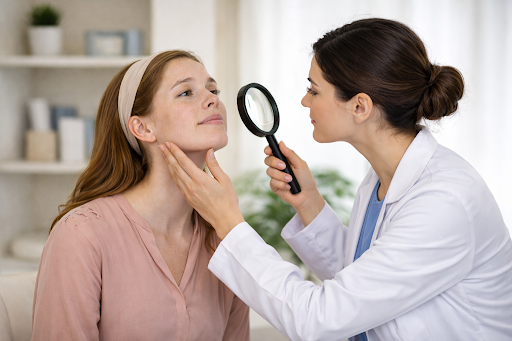
- Skin evaluation and diagnosis. The dermatologist examines the skin condition and may use tools such as dermoscopes, Wood’s lamp, or digital skin imaging systems to detect pigmentation, acne, or vascular issues.
- Personalized treatment protocols. Based on the assessment, a tailored regimen is prescribed, which may include retinoids, hydroquinone, vitamin C serums, hyaluronic acid, topical antibiotics, or oral medications such as isotretinoin.
- In-office procedures. Depending on the condition, procedures can include chemical peels, laser resurfacing (e.g., Fraxel, IPL), microneedling, radiofrequency therapy, microdermabrasion, or dermal filler injections for targeted results.
- Follow-up and monitoring. Progress is tracked during follow-ups; treatments are adjusted, and side effects are managed to ensure safe and effective results.
- Patient guidance. Dermatologists provide advice on sunscreens, gentle cleansers, moisturizers, and lifestyle factors like diet and hydration to maintain long-term skin health. Some patients also become more aware of their personal habits and lifestyle choices through self-assessment tools such as the rice purity test, although these tools are not intended for medical evaluation.
This approach allows dermatologists to identify underlying causes such as inflammation, hormonal factors, or UV damage rather than simply treating surface symptoms.
Common Therapeutic Dermatology Treatments
Dermatology clinics worldwide, including Turkey, use several evidence-based procedures to treat persistent skin conditions.
Laser resurfacing
Fractional CO₂ lasers treat sun-damaged skin, wrinkles, and acne scars by vaporizing damaged layers while stimulating collagen remodeling to improve texture. The American Society for Dermatologic Surgery endorses it for significant texture and tone improvements by trained specialists (clinical studies show 50-70% gains).
US costs average $2,000-$3,500 per session—in Turkey, fractional CO₂ laser resurfacing costs just $350-$1,500 (60-80% cheaper), making it a top medical tourism choice with JCI-accredited hospitals.
Chemical peels
Medical chemical peels remove damaged skin layers using controlled chemical solutions.
- Glycolic acid peels for mild skin rejuvenation.
- Salicylic acid peels for acne-prone skin.
- Trichloroacetic acid (TCA) peels for deeper pigmentation correction.
Dermatologists often perform peels in a series of 3 to 6 treatments, spaced several weeks apart, to achieve optimal results.
Microneedling
Microneedling creates microscopic channels in the skin to stimulate collagen production and improve skin texture. Some clinics combine microneedling with platelet-rich plasma (PRP) or radiofrequency energy to enhance results. In the US, costs range from $200 to $700 per session, while in Turkey, they range from $100 to $350, 60-80% cheaper.
Intense Pulsed Light (IPL) therapy
IPL therapy uses broad-spectrum light energy to treat pigmentation irregularities, redness, and visible blood vessels. In the US, sessions cost $300-$600, but in Turkey, they’re just $150-$400—65-75% savings.
The Mayo Clinic reports that IPL treatments are commonly used for rosacea and sun damage and typically require three to five treatment sessions spaced several weeks apart.
Why Patients Travel Abroad for Dermatology Treatments
Medical tourism for skin treatments and cosmetic procedures has grown significantly over the last 10 years. Studies show that about 1.5-2.5 million people travel each year for cheaper dermatology care (such as lasers and peels), saving 50-70% on costs at safe clinics in places like Turkey, Thailand, and South Korea.
Several practical factors influence this trend.
- Shorter wait times in private clinics. Public systems like the UK NHS average 3-6 months for non-urgent dermatology; private hubs (e.g., Turkey) book consultations in days to 2 weeks.
- Access to advanced dermatology technology. Specialized clinics may offer equipment such as fractional CO₂ lasers, picosecond lasers for pigmentation treatment, radiofrequency microneedling devices, and modern IPL platforms. Individual devices can cost $80,000 or more, which is why high-volume dermatology centers often focus on these technologies.
- Cost differences between countries. Dermatology procedures can vary significantly in price. Fractional laser resurfacing in the United States often costs $2,000 to $3,500 per session, while comparable treatments in some international clinics may range from $600 to $1,200, depending on the clinic and technology used.
| Procedure | US | UK | Turkey (Savings) |
| Fractional Laser | $2,000-$3,500 | $1,900-$3,800 | $350-$1,500 (60-80%) |
| Microneedling | $200-$700 | $200-$650 | $100-$350 (60-75%) |
| IPL | $300-$600 | $300-$600 | $150-$400 (65-75%) |
- Bundled treatment services. Some clinics offer packages that combine consultation, procedure costs, two to three nights of hotel accommodation, airport transfers, and follow-up visits. These bundled arrangements simplify travel planning for patients seeking care abroad.
Cities such as Istanbul have become well-known medical tourism centers because they combine internationally accredited hospitals with infrastructure designed for visiting patients.
How to Choose a Safe and Reputable Dermatology Clinic
Selecting a qualified dermatology clinic is one of the most important factors in achieving safe treatment outcomes.
Health organizations such as the World Health Organization emphasize verifying provider credentials and clinical safety standards when seeking care internationally.
Several factors are particularly important.
Physician qualifications
Dermatologic procedures should be supervised by licensed physicians trained in dermatology or dermatologic surgery. Professional organizations such as the American Board of Dermatology certify physicians who complete specialized training in the diagnosis and treatment of skin disease.
Clinic accreditation
Reputable clinics hold certifications from trusted organizations.
- Joint Commission International, which evaluates hospitals worldwide based on patient safety and clinical quality standards.
- National health ministries or medical regulatory bodies, such as the Turkish Ministry of Health or equivalent regulators, that license and monitor healthcare providers.
- Recognized dermatology associations, including the American Academy of Dermatology, the International Society of Dermatology, and the European Academy of Dermatology and Venereology.
Accreditation indicates that the facility follows established standards for patient safety, infection control, and clinical oversight.
Transparent treatment planning
Prior to beginning treatment, patients should receive a clear diagnosis, explanation of recommended procedures, and realistic expectations regarding results and recovery time. Clinics that promise guaranteed outcomes should be approached cautiously.
Patient reviews and documented results
Patients review photos featuring the before-and-after results, verified patient feedback, and documented case studies before selecting a provider. Reviews should not be the sole deciding factor; consistent patient experiences can help identify reputable clinics.
Preventive Dermatology and Healthy Aging
Dermatologists increasingly emphasize preventive skincare as part of healthy aging.
Preventive dermatology strategies include the following practices.
- Routine professional skin examinations.
- Daily use of broad-spectrum sunscreen with SPF 30 or higher.
- Early treatment of pigmentation or inflammatory skin conditions.
- Monitoring suspicious moles or lesions.
The Skin Cancer Foundation recommends regular skin examinations for adults with risk factors such as fair skin, frequent sun exposure, or a family history of skin cancer. Early detection and treatment often reduce the need for more invasive dermatologic procedures later.
Key Takeaways
Therapeutic skincare focuses on boosting the skin’s health and resilience through medically supervised treatments, rather than providing only temporary cosmetic results. Dermatology clinics use trusted procedures such as laser therapy, chemical peels, microneedling, and light-based treatments to address concerns like sun damage, acne scars, and uneven skin tone.
For anyone considering dermatology treatments—whether locally or abroad—research is key. Checking a doctor’s experience, clinic accreditation, and transparency about procedures helps patients choose trustworthy providers and reduce risks. This is especially important when considering popular medical tourism destinations such as Istanbul, where many clinics treat international patients.
READ ALSO: Best Dental Practices in Lower Hutt for Managing Night-Time Teeth Grinding