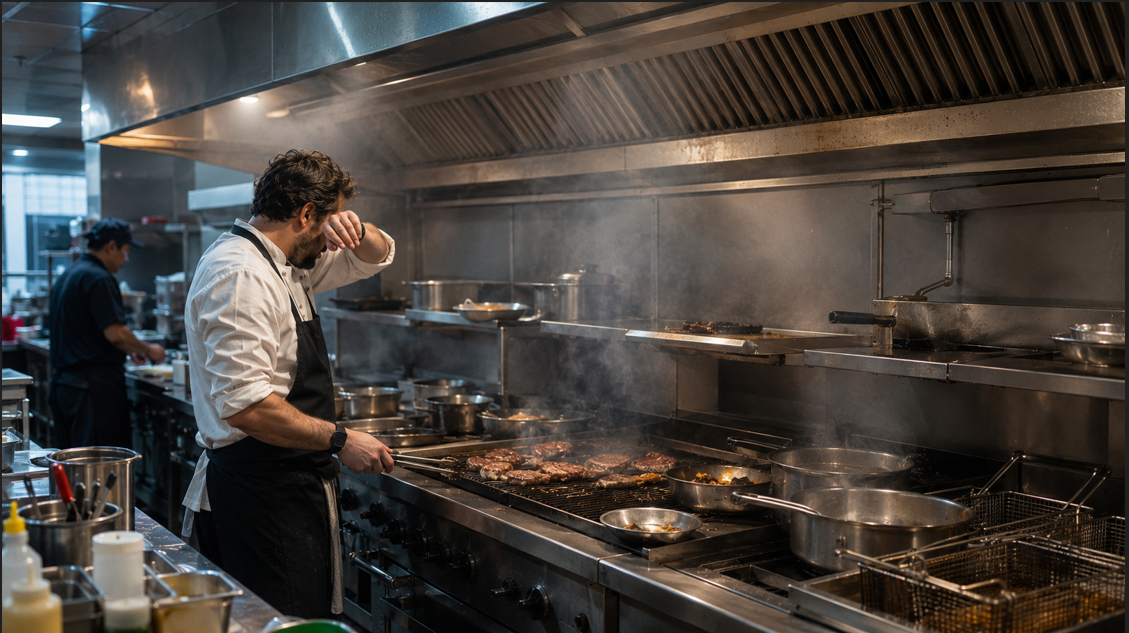
A busy restaurant kitchen creates massive amounts of heat, smoke, and grease every shift. Your exhaust setup works hard to keep the air clean. When you ignore early warning signs, high power bills and severe fire hazards may occur.
The AIRAH reports that cooking materials ignite almost half of all commercial kitchen fires, and 90% of these spread directly into the exhaust system. You must spot the physical signs of commercial kitchen exhaust problems before the equipment completely breaks down.
Why Restaurants Need a Proper Ventilation System
A working ventilation system removes heat, clears airborne grease, and keeps the kitchen safe. According to AIRAH, kitchens account for up to 50% of all structural fires in commercial buildings across Australia. Grease-filled ductwork is the main reason fires spread so fast.
Once grease ignites inside a duct, temperatures can reach 1,000°C within minutes. That is enough to burn through surrounding materials. That’s why a well-maintained ventilation system is required.
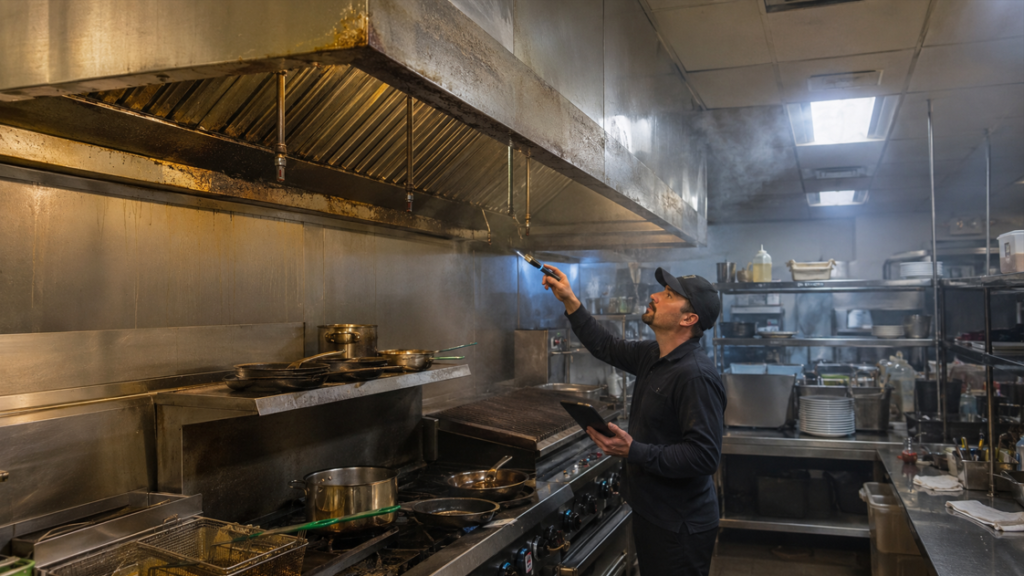
7 Warning Signs Your Restaurant’s Ventilation Has Issues
A failing ventilation system does not always announce its breakdown. Most of the time, it sends smaller signals first. Here are the seven most common ones Brisbane restaurant operators experience:
1. Smoke Staying in the Kitchen
If smoke is lingering above the cooking line instead of clearing into the hood, it means suction is failing. A healthy system captures smoke at the canopy before it spreads. When smoke drifts sideways or hangs low, it is a clear sign of commercial kitchen exhaust airflow problems.
If smoke is not clearing from the restaurant kitchen, it indicates clogged kitchen exhaust filters, a blocked duct, or a fan starting to fail.
2. Grease Dripping from the Hood
Grease leaking from the commercial kitchen exhaust hood is not just a cleaning reminder. It is a fire warning. It means the system is saturated past capacity. AS 1851 sets a 2mm maximum grease layer anywhere in the system.
The AIRAH Technical Bulletin on Kitchen Hood Exhaust Systems confirms that grease buildup in kitchen exhaust ductwork can fuel a duct fire reaching 1,000°C within minutes. If grease is dripping from the hood face, the ductwork above is almost certainly in worse condition.
3. The Fan Making Unusual Noises
A well-serviced exhaust fan runs quietly. Grinding, rattling, or squealing sounds mean a mechanical fault.
If your kitchen exhaust fan is making unusual noises, it is a sign of a grease-coated blower wheel, worn bearings from constant heat exposure, or a cracked belt. In most cases, a clean and bearing check resolves it. Catching it early costs far less than a full commercial kitchen exhaust fan motor failure.
4. Doors Slamming Shut on Their Own
Kitchen doors that slam or feel like a vacuum is pulling them signal a make-up air problem. This is actually negative air pressure in the restaurant kitchen. It happens when the exhaust removes more air than it replaces. It draws replacement air from under doors and through gaps.
That pull is called a make-up air imbalance. It is more common than most operators realise. Under AS/NZS 1668.1, Australia’s standard for commercial kitchen ventilation, the ventilation system and the air supply coming in must be balanced. When they are not, the problem is both a comfort issue and a code violation.
5. Cooking Smells Reaching the Dining Room
When guests smell the kitchen from their table, the ventilation is not capturing odours at the hood face.
A working system captures grease vapour and food smells at the canopy and vents them outside. Lingering cooking odours in the restaurant’s dining area mean capture velocity is too weak. Or it can be a duct gap that is releasing smells back indoors. Fixing the weak suction from the commercial kitchen exhaust hood is the only way to stop odours from crossing into the dining area.
6. The Kitchen Running Excessively Hot
A kitchen hotter than usual, even with air conditioning on, means the exhaust is not extracting heat. When reduced airflow from the restaurant exhaust system limits heat extraction, temperatures rise across the whole kitchen. An air conditioning system cools the air it conditions. But it cannot replace a failing exhaust.
Excessive heat in the commercial restaurant kitchen is also a staff safety concern. Safe Work Australia specifically identifies commercial kitchens as high-risk heat environments. It lists exhaust ventilation as a required control measure.
7. Grease Trails Outside the Ductwork
Staining on the ceiling above the hood, near the roof discharge, or around the fan housing means grease is escaping the system.
These are blocked kitchen exhaust duct warning signs that most operators miss. Grease leaking from the duct seams is a direct fire pathway into the building structure. External staining is one of the clearest warning signs for kitchen exhaust cleaning.
When to Take Immediate Action
Some signs need a call today. Others need a booking this week.
Call a professional today if:
- Grease is dripping from the hood
- The fan is grinding or rattling
- Smoke is staying in the kitchen
- Doors are pulling shut on their own
These are safety-critical faults that put your staff, your compliance, and your insurance at risk.
Book an assessment this week if:
- Smells are reaching the dining room
- The kitchen is hotter than usual during service
- Suction feels weak at the hood face
- Grease staining is visible outside the duct
When to clean a commercial kitchen exhaust system depends on how much grease your cooking produces, not the calendar.
Final Thoughts
The signs of poor commercial kitchen ventilation appear before any serious problem develops. Scheduled maintenance and documented cleaning are what keep a Brisbane kitchen running safely.
If you are running a restaurant anywhere in Brisbane, Eco Cleaning Brisbane is worth a call. With over 20 years of experience servicing commercial kitchen exhaust systems across Brisbane, their team knows exactly what to look for and what needs to be done before a small sign turns into a costly problem. You can rely on them for a professional inspection.
READ ALSO: What Makes a Residential Community Attractive to Families and Professionals