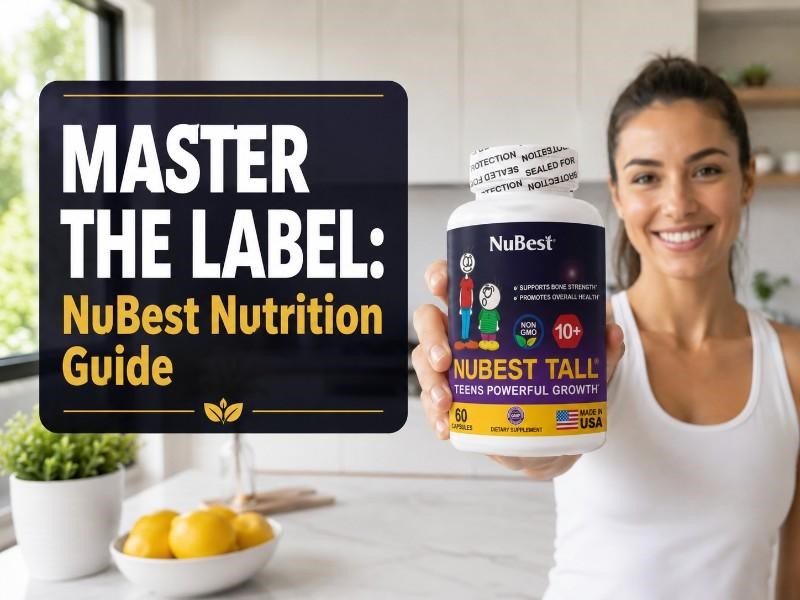
Dietary supplements fill entire aisles in American stores now. Amazon, Walmart, Costco, pharmacy chains — everywhere. Americans spend more than $50 billion each year on vitamins, minerals, protein powders, and wellness supplements. Yet most shoppers still glance at the front label for five seconds and toss the bottle into the cart.
That’s where problems start.
A polished front label can hide tiny serving sizes, underdosed ingredients, or vague proprietary blends buried on the back panel. In practice, the real story sits inside the Supplement Facts label, not the marketing copy splashed across the bottle.
NuBest Nutrition products follow U.S. labeling rules established under the Dietary Supplement Health and Education Act (DSHEA), alongside oversight from the U.S. Food and Drug Administration (FDA) and advertising standards monitored by the Federal Trade Commission (FTC). Still, label literacy matters because regulations create a framework, not perfect consumer understanding.
For parents comparing growth supplements, athletes tracking micronutrients, or health-conscious adults trying to avoid wasting money, reading vitamin labels correctly changes everything.
And honestly, once the process clicks, supplement labels stop looking intimidating and start looking predictable.
Understanding the Supplement Facts Panel on NuBest Nutrition Products
The Supplement Facts panel works like a nutrition roadmap. Every legally compliant dietary supplement sold in the United States — including NuBest Tall 10+ — follows a structured format outlined in the Code of Federal Regulations (CFR).
Here’s what typically appears first:
- Serving size
- Servings per container
- Active ingredients
- Amount per serving
- % Daily Value (%DV)
- Other ingredients
The serving size section trips up many consumers. One bottle may contain 60 capsules, but the serving size could be 2 capsules daily. That changes cost calculations and dosage expectations immediately.
Now, here’s the interesting part. % Daily Value uses a reference intake based on a 2,000-calorie diet. That number doesn’t perfectly fit every teenager, athlete, or adult. It simply provides a standardized benchmark.
A quick breakdown helps:
| Label Element | What It Means | What Actually Matters |
| Serving Size | Recommended intake per use | Determines real dosage |
| Servings Per Container | Number of total uses | Affects monthly cost |
| %DV | Percentage of daily nutrient target | Reveals underdosing or megadosing |
| Active Ingredients | Functional nutrients | Core formula quality |
| Other Ingredients | Capsule materials and additives | Transparency and tolerability |
One thing experienced supplement users notice quickly: nutrient density matters more than flashy branding. A formula with strong bioavailability and meaningful micronutrient levels usually outperforms trendy packaging.
That tends to separate serious formulations from marketing-heavy products.
Breaking Down Active Ingredients in NuBest Nutrition Supplements
Most NuBest Nutrition products focus on wellness, bone support, and growth-related nutrition. Common ingredients include Calcium, Vitamin D3, Zinc, Collagen, and amino acids.
Each ingredient tells part of the formula story.
Vitamin D3
Vitamin D3 often appears in either IU (International Units) or micrograms (mcg). Conversion matters:
- 1 mcg Vitamin D = 40 IU
So, 25 mcg equals 1,000 IU.
That tiny detail confuses shoppers constantly.
Vitamin D3 supports calcium absorption, which directly affects bone health. According to National Institutes of Health (NIH) fact sheets, dosage ranges vary by age group and individual deficiency status.
Calcium
Not all calcium works the same way.
Elemental calcium determines how much usable calcium your body actually absorbs. Calcium carbonate contains more elemental calcium by weight, while calcium citrate generally absorbs better for some adults.
That distinction rarely appears in flashy advertising. It appears quietly on the label.
Zinc and Collagen
Zinc contributes to immune function and cellular growth. Collagen supports connective tissues and structural proteins.
What tends to matter most:
- Dosage accuracy
- Ingredient form
- Absorption rate
- Scientific support
Some formulas use standardized herbal extracts, while others rely on raw powder forms. Standardized extracts typically provide more consistent potency because manufacturers measure active compounds precisely.
For example:
| Ingredient Type | Typical Advantage | Potential Drawback |
| Standardized Extract | Consistent active compounds | Higher manufacturing cost |
| Raw Herbal Powder | Broader plant profile | Less dosage precision |
| Collagen Peptides | Better absorption | Usually more expensive |
A lot of experienced label readers cross-check ingredient amounts against NIH nutrient fact sheets. That habit prevents overpaying for trendy ingredients sprinkled into formulas at ineffective doses.
And yes, that happens constantly in the supplement industry.
Identifying Fillers, Additives, and “Other Ingredients”
The “Other Ingredients” section often gets ignored completely. That’s a mistake.
Inactive ingredients affect capsule stability, texture, shelf life, and allergen exposure.
Common examples include:
- Magnesium stearate
- Silicon dioxide
- Gelatin capsule shells
- Rice flour
- Cellulose
Magnesium stearate functions as a flow agent during manufacturing. Silicon dioxide prevents clumping. These ingredients usually appear in tiny amounts.
Online supplement debates sometimes treat every additive like a health disaster. Reality tends to be less dramatic. Most excipients exist for manufacturing efficiency and capsule consistency.
Still, ingredient transparency matters.
Vegetarian consumers often check whether capsules contain gelatin or plant-based cellulose. Parents frequently scan for allergen disclosures involving soy, dairy, or gluten under the Food Allergen Labeling and Consumer Protection Act (FALCPA).
A practical checklist helps here:
- Look for allergen statements
- Identify artificial colors or flavors
- Check capsule shell material
- Review inactive ingredient count
- Verify Non-GMO or third-party testing claims if relevant
In practice, shorter “Other Ingredients” lists usually feel cleaner and easier to evaluate.
Not automatically better. Just easier.
Claims, Certifications, and Marketing Language
Supplement marketing gets slippery fast.
Under FDA regulations, dietary supplements can make structure-function claims like:
- “Supports bone health”
- “Promotes immune function”
- “Helps maintain healthy growth”
What labels cannot legally claim is disease treatment or cure.
That’s why bottles include the familiar FDA disclaimer:
“These statements have not been evaluated by the Food and Drug Administration.”
Consumers often misunderstand that sentence. It doesn’t mean the product is fake. It means the FDA has not approved the supplement as a pharmaceutical drug.
Third-party certifications add another layer of quality assurance.
| Certification | What It Signals | Why Consumers Care |
| GMP Certified | Good Manufacturing Practice compliance | Manufacturing quality controls |
| NSF Certified | Independent testing verification | Ingredient accuracy |
| Made in USA | Domestic production standards | Supply chain confidence |
The Federal Trade Commission (FTC) also regulates deceptive advertising claims. So if a supplement promises impossible height gains in 14 days… that’s usually a red flag, not a breakthrough.
Most long-term supplement users learn to trust boring labels more than dramatic ones.
Funny how that works.
Wondering if you can still grow taller? Get your answers at HeightGrowth.net.
Serving Size, Dosage, and Safety for American Consumers
Serving size confusion causes more supplement mistakes than almost anything else.
A bottle containing 120 capsules sounds generous until the label reveals a 4-capsule daily serving. Suddenly, the bottle lasts 30 days instead of four months.
Dosage also matters because nutrients have Upper Tolerable Intake Levels (ULs). Excessive Vitamin D, Zinc, or Calcium intake can create side effects over time.
That’s where NIH guidelines and Recommended Dietary Allowances (RDAs) become useful reference points.
A few practical realities:
- Teenagers have different nutrient requirements than adults
- Combining multiple supplements increases overlap risk
- Fat-soluble vitamins accumulate differently than water-soluble ones
- Drug interactions happen more often than people expect
The American Academy of Pediatrics (AAP) and Centers for Disease Control and Prevention (CDC) both emphasize age-specific nutrition guidance for children and teens.
For families using growth-focused supplements, dosage accuracy matters more than hype.
That’s usually the point where experienced shoppers slow down and read every line twice.
Step-by-Step Checklist: How to Read a NuBest Nutrition Label
A simple system makes label reading faster and far less overwhelming.
1. Start With Serving Size
Check:
- Capsule count per serving
- Daily intake recommendation
- Total servings per container
This step changes the real monthly cost immediately.
2. Review % Daily Value
Look for:
- Extremely low doses
- Mega-doses far above 100% DV
- Nutrient balance
More isn’t automatically better.
3. Scan Active Ingredients
Focus on:
- Vitamin and mineral forms
- Standardized extracts
- Evidence-based dosages
- Bioavailability indicators
4. Read Other Ingredients Carefully
Watch for:
- Allergens
- Artificial additives
- Capsule materials
- Excessive fillers
5. Verify Certifications
Search for:
- GMP compliance
- NSF certification
- Third-party testing
- Made in USA labeling
6. Compare Cost Per Serving
A cheaper bottle sometimes costs more per usable serving.
That catches shoppers off guard constantly on Amazon and Walmart listings.
Conclusion
Reading supplement labels correctly protects both health and budget. And honestly, the process becomes surprisingly intuitive after a few product comparisons.
NuBest Nutrition labels contain the same core components required across the U.S. dietary supplement market: serving sizes, active ingredients, Daily Values, other ingredients, and regulatory disclaimers. The skill comes from understanding what those sections actually reveal.
The most informed supplement buyers rarely focus on marketing headlines alone. They analyze dosage accuracy, ingredient transparency, certifications, allergen disclosures, and cost per serving together.
That approach usually leads to smarter purchases, fewer disappointments, and a much clearer understanding of what actually goes into the body every day.