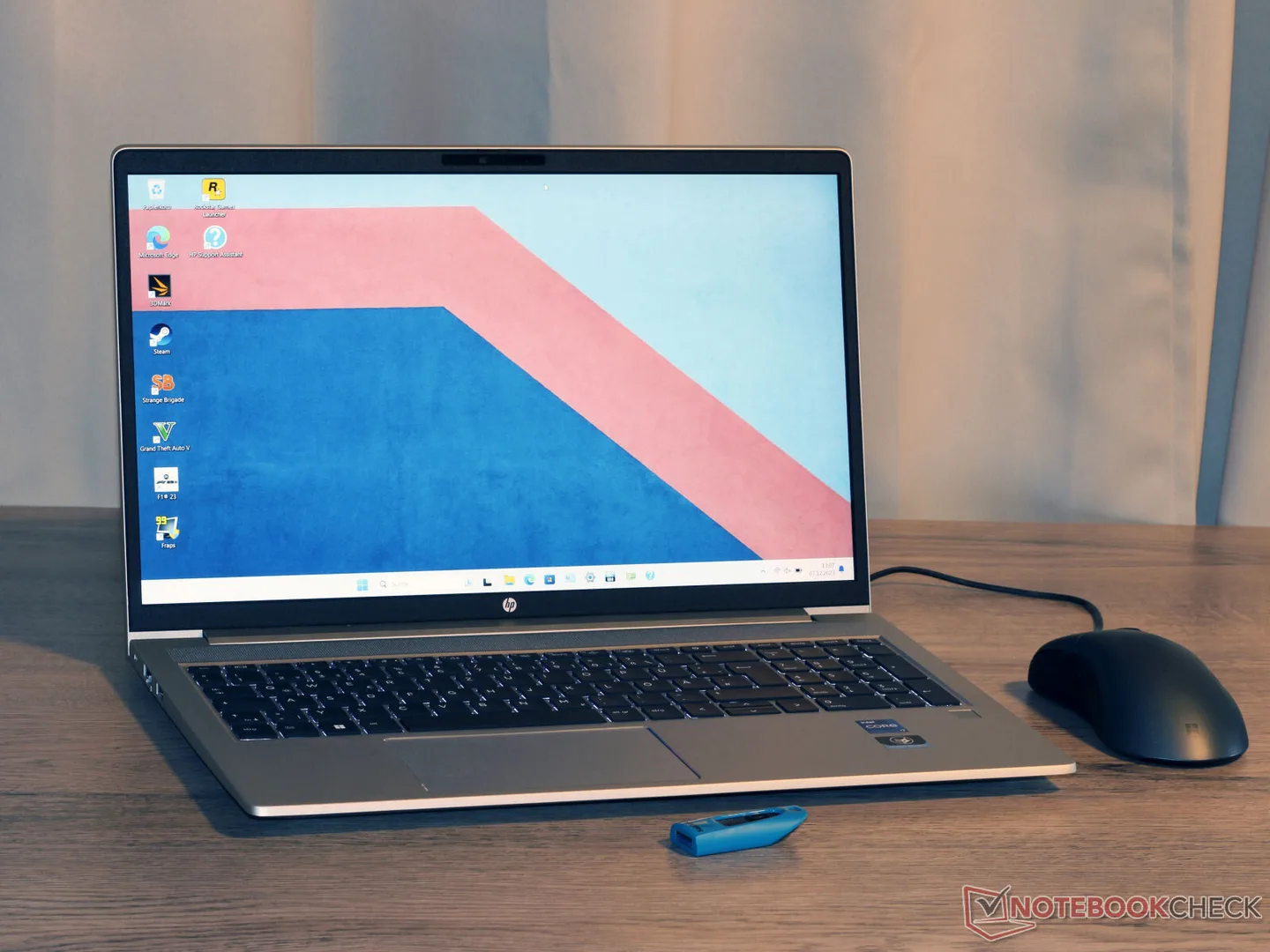
Choosing the right business laptop is no longer just about finding a reliable machine for emails and spreadsheets. Modern professionals need a laptop that can handle multitasking, video conferencing, cloud-based applications, content creation, and long hours of productivity without compromising on performance or battery life. Among the most popular options in the business laptop segment are the HP ProBook 450 G10 and the Dell Latitude 3550. Both are designed for professionals, students, and small businesses looking for a dependable Windows laptop with enterprise-grade features.
Although these laptops target the same audience, they approach productivity differently. HP focuses on delivering premium build quality, powerful Intel processors, and a polished user experience, while Dell emphasizes security, easy manageability, and dependable everyday performance. Understanding these differences is essential before making a purchase.
This detailed comparison explores how the HP ProBook 450 G10 and Dell Latitude 3550 perform across important categories, helping you determine which business laptop offers the best value for your specific needs.
Design and Build Quality
The first impression of any business laptop comes from its design, and both models maintain a professional appearance suitable for office environments, client meetings, and remote work.
The HP ProBook 450 G10 features a sleek aluminum top cover combined with a clean silver finish that gives it a premium look. Its minimalist design makes it appear more expensive than its price tag suggests. The laptop feels sturdy, with minimal flex in the keyboard deck, making it comfortable for daily commuting and long-term use.
Dell’s Latitude 3550 follows Dell’s traditional business-focused design philosophy. Instead of prioritizing style, Dell focuses on durability and practicality. The chassis feels solid, and the laptop is designed to withstand everyday office usage. While it may not appear as elegant as the ProBook, it projects a professional image that many corporate users appreciate.
Portability is another consideration. Both laptops are designed as 15.6-inch productivity machines rather than ultra-light travel laptops. Their weights are similar, making either suitable for users who frequently move between home and office but do not require an ultra-portable device.
Overall, users looking for a more premium aesthetic may prefer the HP ProBook 450 G10, while those prioritizing rugged reliability may lean toward the Dell Latitude 3550.
Display Quality
A quality display directly impacts productivity, especially for professionals spending hours working on documents, presentations, coding projects, or video meetings.
The HP ProBook 450 G10 typically offers a Full HD IPS display with anti-glare technology. Colors appear vibrant enough for business presentations, and viewing angles remain consistent when collaborating with colleagues. The anti-glare coating significantly reduces reflections, making it easier to work in bright offices or near windows.
Dell’s Latitude 3550 also includes Full HD display options, focusing on eye comfort and long working sessions. Text appears sharp, and the screen delivers sufficient brightness for indoor use. Dell also provides configurations with enhanced brightness depending on the model, making it suitable for professionals who frequently work in varying lighting conditions.
For creative professionals who occasionally edit photos or design presentations, the HP display generally delivers slightly richer colors. However, neither laptop is intended to replace a professional color-accurate workstation.
Both displays perform well for productivity tasks including Microsoft Office, web browsing, virtual meetings, accounting software, and business management applications.
Performance and Processing Power
Performance is where business laptops truly prove their worth. Whether you’re running multiple browser tabs, Excel spreadsheets, accounting software, virtual machines, or collaboration tools like Microsoft Teams, processor performance matters.
The HP ProBook 450 G10 is available with Intel’s 13th Generation Core processors, including Core i5 and Core i7 options. These processors offer significant improvements in multitasking thanks to Intel’s hybrid architecture, combining Performance cores and Efficient cores. Everyday operations feel smooth, applications launch quickly, and switching between multiple workloads happens without noticeable slowdowns.
The Dell Latitude 3550 is also equipped with Intel Core processors depending on the chosen configuration. Dell optimizes the Latitude series for business stability, ensuring reliable performance throughout extended work sessions. Routine office tasks, cloud applications, CRM platforms, and enterprise software run efficiently without placing excessive strain on the hardware.
When comparing similar processor configurations, overall performance differences remain relatively small. However, HP often provides more aggressive performance tuning, allowing demanding workloads such as light video editing, programming, and multitasking to complete slightly faster.
Professionals who regularly work with large Excel files, data analysis software, development environments, or productivity suites may appreciate the additional responsiveness offered by the ProBook.
Memory and Storage
Business users increasingly rely on multitasking, making sufficient RAM and fast storage essential.
Both laptops support SSD storage, resulting in significantly faster boot times, quick application launches, and rapid file transfers compared to traditional hard drives.
The HP ProBook 450 G10 supports multiple storage configurations, allowing businesses to choose capacities suitable for their workload. Whether storing large presentations, project files, or local databases, SSD performance remains consistently fast.
Dell provides similar storage flexibility with NVMe SSD options, ensuring smooth day-to-day performance. Large software installations, operating system updates, and document management feel responsive across both devices.
Memory upgrades are another strength. Depending on the specific configuration, both laptops allow RAM expansion, helping organizations extend the lifespan of their devices as software requirements increase.
For users planning to keep their laptop for several years, upgradeability is an important advantage offered by both models.
Graphics Performance
Neither laptop targets gaming enthusiasts, but integrated graphics have become increasingly capable for professional workloads.
The HP ProBook 450 G10 uses Intel Iris Xe Graphics on supported processor configurations, providing enough power for multiple external displays, media editing, presentation creation, and hardware-accelerated productivity applications.
Dell Latitude 3550 offers comparable integrated graphics performance, handling video playback, virtual meetings, web applications, and basic creative workloads with ease.
Tasks like Adobe Photoshop, Canva, Figma, PowerPoint animations, and light video editing remain perfectly manageable on both machines.
However, professionals requiring intensive 3D rendering, CAD software, or advanced video production should consider dedicated workstation-class laptops instead.
Cooling and Everyday Reliability
Efficient thermal management contributes significantly to user experience during extended work sessions.
The HP ProBook 450 G10 maintains stable temperatures even under sustained workloads. The cooling system effectively balances performance and fan noise, allowing users to work comfortably without excessive heat buildup around the keyboard.
Dell’s Latitude 3550 follows a similarly conservative cooling strategy. Rather than maximizing benchmark performance, Dell prioritizes stability and consistent operation throughout the workday. This makes it particularly attractive for corporate environments where reliability matters more than peak performance.
Both laptops remain relatively quiet during everyday office tasks. Fan activity increases during software installations or processor-intensive applications but generally stays within comfortable noise levels.
For professionals working eight or more hours daily, both systems provide dependable thermal performance suitable for long productivity sessions.
Keyboard and Touchpad
A business laptop is only as comfortable as its keyboard, especially for users who spend hours writing reports, replying to emails, preparing presentations, or entering data. Fortunately, both the HP ProBook 450 G10 and Dell Latitude 3550 offer keyboards designed with productivity in mind.
The HP ProBook 450 G10 features a full-size keyboard with a dedicated numeric keypad, making it particularly useful for finance professionals, accountants, and users who regularly work with spreadsheets. The keys have good travel, provide satisfying tactile feedback, and remain comfortable even during extended typing sessions. The keyboard layout is well-spaced, reducing typing errors and improving overall efficiency.
Dell has always been known for comfortable keyboards, and the Latitude 3550 continues that reputation. The keys feel slightly softer than those on the ProBook, making long typing sessions less fatiguing for many users. The touchpad is smooth, accurate, and responsive, supporting Windows Precision drivers for reliable gesture controls.
Both laptops include spill-resistant keyboards on selected configurations, adding an extra layer of protection for office environments. Choosing between them largely comes down to personal preference, but many users may find Dell’s keyboard slightly more comfortable while HP’s keyboard feels a bit firmer and more responsive.
Battery Life
Battery performance plays a significant role for professionals who travel frequently or attend meetings away from their desks.
The HP ProBook 450 G10 delivers solid battery life under typical office workloads. Activities such as web browsing, document editing, video conferencing, and cloud-based collaboration can comfortably last through most of a workday, depending on screen brightness and workload. HP’s power management software also helps optimize battery usage without sacrificing responsiveness.
The Dell Latitude 3550 offers similarly dependable endurance. Dell focuses on efficiency rather than maximizing benchmark numbers, making the Latitude an excellent companion for business users who need consistent battery performance throughout the day. Intelligent battery management features further help preserve long-term battery health.
Fast charging support is another advantage shared by both laptops. Even a short charging session can provide enough power for several additional hours of work, which is particularly useful for professionals with busy schedules.
Overall, battery performance is closely matched, with both systems offering enough endurance for most business users.
Ports and Connectivity
Business professionals often connect multiple accessories including external monitors, storage drives, projectors, wired networks, and docking stations. Having the right selection of ports eliminates the need for constant adapters.
The HP ProBook 450 G10 includes a versatile collection of connectivity options, typically featuring USB Type-C, multiple USB Type-A ports, HDMI, RJ-45 Ethernet, an audio combo jack, and modern wireless connectivity with Wi-Fi 6 and Bluetooth support. This wide range of ports makes it easy to integrate into both office and home workspaces.
The Dell Latitude 3550 offers a similarly comprehensive selection. Dell understands enterprise requirements, so wired Ethernet remains available alongside USB-C, USB-A, HDMI, and headphone connectivity. Depending on the configuration, users may also benefit from advanced docking support for multi-monitor office setups.
For professionals working across different environments, both laptops provide excellent connectivity without requiring additional accessories.
Security and Business Features
Security has become one of the defining characteristics of modern business laptops. Protecting sensitive company information requires more than just antivirus software.
HP equips the ProBook 450 G10 with several business-oriented security technologies. Features such as TPM security, BIOS protection, optional fingerprint readers, Windows Hello compatibility, and HP Wolf Security help defend against modern cyber threats. These enterprise-grade protections make the ProBook attractive for organizations that prioritize data security.
Dell’s Latitude series has long been recognized for its robust security ecosystem. The Latitude 3550 includes TPM support, optional biometric authentication, BIOS-level protections, and enterprise management capabilities that simplify IT administration across large organizations. Dell’s security-focused approach is one reason Latitude laptops remain popular in corporate environments worldwide.
Both laptops provide excellent protection for business users, although Dell maintains a slight advantage in enterprise management tools for larger organizations with dedicated IT departments.
Software Experience
Since both laptops ship with Windows, the overall user experience feels familiar. However, the manufacturers include their own software utilities to improve productivity and system management.
HP provides useful applications that simplify firmware updates, hardware diagnostics, performance optimization, and security management. The software remains relatively lightweight and integrates well with Windows.
Dell includes Dell Optimizer, one of its strongest productivity tools. It intelligently adjusts system performance, battery usage, network prioritization, and audio settings based on user behavior. Features such as AI-powered optimization help improve responsiveness during daily workflows without requiring manual adjustments.
Neither laptop suffers from excessive pre-installed software, allowing users to begin working immediately after setup.
Which Laptop Performs Better in Real-World Usage?
Specifications tell only part of the story. Everyday performance is what truly matters.
During routine office work involving dozens of browser tabs, Microsoft Office applications, cloud storage, video conferencing, and email management, both laptops perform exceptionally well.
The HP ProBook 450 G10 feels slightly quicker when handling heavier multitasking or processor-intensive workloads. Professionals who occasionally edit videos, process large datasets, write software, or perform more demanding productivity tasks may notice its stronger overall responsiveness.
The Dell Latitude 3550 focuses more on delivering consistent, reliable performance throughout long workdays. Stability, efficient thermal management, and enterprise support make it an excellent choice for corporate deployments and office environments where dependability is more important than squeezing out every bit of processing power.
Pricing and Value
Price is often the deciding factor when selecting a business laptop.
The HP ProBook 450 G10 generally offers outstanding value by combining premium design, modern Intel processors, upgradeability, and strong overall performance. Users receive many enterprise-level features without entering premium workstation pricing.
The Dell Latitude 3550 is often priced similarly depending on configuration. While it may sometimes cost slightly more, buyers receive Dell’s proven enterprise ecosystem, excellent support infrastructure, and business-focused management features.
For individual professionals, freelancers, students, and small business owners, the HP ProBook frequently provides a better balance between price and performance.
For medium-sized and large organizations already invested in Dell’s enterprise management ecosystem, the Latitude 3550 can justify its cost through easier deployment and long-term maintenance.
Final Verdict
The HP ProBook 450 G10 and Dell Latitude 3550 are both outstanding business laptops, but they excel in slightly different areas.
If your priority is performance, premium build quality, responsive multitasking, and excellent value for money, the HP ProBook 450 G10 is the stronger overall choice. It delivers a polished user experience that appeals to professionals, students, content creators, and small business owners alike.
On the other hand, if your organization values enterprise-grade security, dependable long-term reliability, centralized IT management, and a proven corporate support ecosystem, the Dell Latitude 3550 remains an excellent investment.
Ultimately, neither laptop is a poor choice. The best option depends on how you work. Users seeking maximum productivity for their budget will likely find the HP ProBook 450 G10 more appealing, while enterprise environments requiring standardized deployment and advanced management tools may prefer the Dell Latitude 3550.
FAQs
Is the HP ProBook 450 G10 better than the Dell Latitude 3550?
For most professionals and small businesses, the HP ProBook 450 G10 offers better overall value thanks to its strong performance, premium design, and competitive pricing. However, the Dell Latitude 3550 remains an excellent choice for organizations that prioritize enterprise management and security.
Which laptop has better battery life?
Both laptops offer reliable all-day battery performance for standard office workloads. Actual battery life depends on configuration, workload, and display brightness, but overall endurance is very similar.
Can these laptops handle programming and software development?
Yes. Both laptops are well suited for programming, web development, coding environments, virtual machines, and multitasking when configured with sufficient RAM and SSD storage.
Which is better for remote work?
Both machines are excellent for remote work, offering quality webcams, reliable wireless connectivity, strong keyboards, and dependable performance for video conferencing and collaboration tools.
Which business laptop offers better value?
For individual buyers and small businesses, the HP ProBook 450 G10 generally provides the better price-to-performance ratio. Larger organizations may benefit more from the Dell Latitude 3550 because of its enterprise-focused management features and corporate support ecosystem.