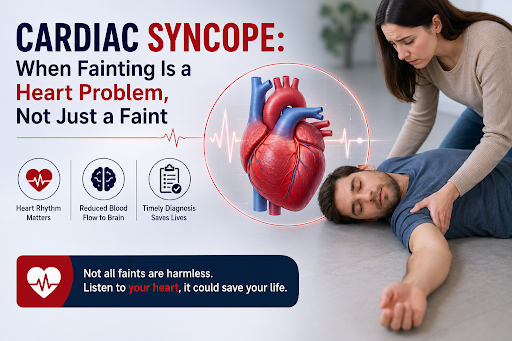
Cardiac syncope describes a fainting episode caused by a sudden drop in blood supply to the brain. Fainting is the broader medical term, covering any temporary loss of consciousness and muscle control, with causes ranging from neurological and metabolic to postural and heart-related. A cardiac origin carries the greatest clinical weight, since it can signal a serious heart condition that needs prompt diagnosis and treatment.
What Exactly Is Syncope?
Syncope is a brief loss of consciousness caused by reduced blood flow to the brain. It usually lasts seconds to a couple of minutes, and the person wakes up fully alert. Syncope isn’t a disease in itself; it’s a symptom, and the underlying cause ranges from harmless to genuinely dangerous.
Vasovagal Syncope vs Cardiac Syncope
Vasovagal syncope causes most ordinary faints. Dehydration, prolonged standing, emotional stress, or pain can trigger it, and warning signs like nausea or sweating usually appear beforehand. Cardiac syncope works differently: the heart can’t pump enough blood to the brain because of an abnormal rhythm or a structural fault, and collapse often happens without warning.
| Feature | Vasovagal Syncope | Cardiac Syncope |
| Trigger | Dehydration, standing, stress, pain, sight of blood | Abnormal heart rhythm or structural heart problem |
| Warning signs | Usually present (nausea, sweating, tunnel vision) | Often minimal or absent |
| Onset during exercise | Rare | Common, especially with exertion |
| Recovery | Quick and complete once lying down | Sudden, but underlying risk remains |
| Associated symptoms | Lightheadedness, ringing in ears | Chest pain, palpitations, breathlessness |
| Family history relevance | Not usually significant | Important (sudden cardiac death, inherited rhythm disorders) |
| Risk level | Generally low | Potentially serious, needs cardiac evaluation |
Warning Signs That Point to a Cardiac Cause
Some fainting episodes carry warning signs that point straight to the heart, not a simple faint. Dr Lo Monaco recommends never ignoring these signs. Catching them early speeds up diagnosis and cuts the risk of serious complications. These alarming signs are given below:
- Fainting during exertion, like exercising or climbing stairs, often points to a heart problem.
- A sudden collapse with no dizziness or warning beforehand is another red flag.
- Chest pain, breathlessness, or palpitations before or after the episode shouldn’t be ignored.
- Fainting while lying flat is unusual for vasovagal causes and needs a closer look.
- Family history of sudden cardiac death or unexplained fainting in young relatives
What Causes Cardiac Syncope?
Several heart conditions can be the reason for cardiac syncope, from rhythm problems to structural and inherited faults. Let’s break down a few of them!
Arrhythmias
Abnormal heart rhythms, whether too fast or too slow, cause most cases of cardiac syncope. Either pattern stops the heart from pumping effectively, and blood flow to the brain drops as a result.
Valvular Heart Disease
Aortic valve stenosis narrows the valve and restricts blood flow through the heart. Exertion raises the body’s oxygen demand, and a narrowed valve can’t keep up, triggering a faint.
Inherited Electrical Conditions
Brugada syndrome and QT interval abnormalities affect the heart’s electrical system. They’re rare, but they raise the risk of dangerous, sometimes fatal, rhythm disturbances.
Aortic Dissection
A tear in the wall of the aorta causes aortic dissection, a genuine medical emergency. Sudden collapse can be one of its first signs, and it needs immediate treatment.
How Can Cardiac Syncope Be Diagnosed?
Here are the steps written to walk you through how doctors diagnose syncope:
Clinical history and physical examination: First of all, the doctor starts by asking about your history, the circumstances around your fainting, and any symptoms you noticed beforehand.
Electrocardiogram (ECG): After that, to diagnose your health, the doctor records your heart’s activity to pick up any rhythm abnormalities through an ECG.
Holter Monitor: You have to wear this device for 24 to 48 hours so the doctor can catch arrhythmias that a standard ECG might miss.
Tilt table test: This step helps to assess how your heart rate and blood pressure respond to changes in posture, helping separate vasovagal causes from cardiac ones.
Echocardiogram: The doctor checks for structural heart disease, including any valve problems.
Dr Lo Monaco’s Approach to Cardiac Syncope
Dr Francesco Lo Monaco, a private cardiologist London patients turn to for syncope evaluation, assesses syncope by taking a detailed history, performing a physical examination, and performing targeted testing, including ECG, Holter monitoring, echocardiography, and tilt table testing where needed.
Once he identifies the underlying cause, he builds a management plan around lifestyle changes, medication review, and procedural treatment where required. He provides his patients with a clear diagnosis and a plan to reduce their risk of further fainting.
Final Thoughts
Most faints aren’t dangerous; if you faint during exercise, without warning, or alongside chest pain or palpitations, call for a proper cardiac workup. Once the cause is identified, cardiac syncope is manageable, and modern testing finds the cause in most patients.
Don’t dismiss a faint as nothing; a structured cardiac assessment gives you an accurate diagnosis, real reassurance, and a clear next step.
Frequently Asked Questions-FAQs
What tests are used to diagnose cardiac syncope?
Doctors typically use an ECG, Holter monitor, echocardiogram, and tilt table test, chosen based on the suspected cause.
Can cardiac syncope be treated?
Yeah, it can be treated depending on the cause through proper medication, lifestyle changes, or a procedure to correct an abnormal rhythm.
Should I see a doctor whenever I faint?
Yes, you have to seek assessment promptly if the fainting happened during exertion, without warning signs, or alongside palpitations or chest pain.
READ ALSO: Hidden Brain Injuries Can Have Lasting Effects on Everyday Life