Single dosing has become more than a home barista trend. For coffee professionals, roasters, trainers, consultants, and small-format operators, it offers a practical way to test coffees, compare recipes, reduce waste, and maintain freshness without keeping beans sitting in a hopper all day. That is why single dose coffee grinder workflow has become an important conversation for anyone who works with multiple coffees, small batches, or precision-focused brewing.
A single-dose grinder is built around a simple idea: weigh only the coffee you need, grind that dose, and move directly into brewing. But in professional use, that simple workflow depends on a much deeper set of performance expectations. Coffee professionals look at retention, grind consistency, burr quality, adjustment precision, static control, workflow speed, maintenance access, and how well the grinder performs across espresso and filter ranges.
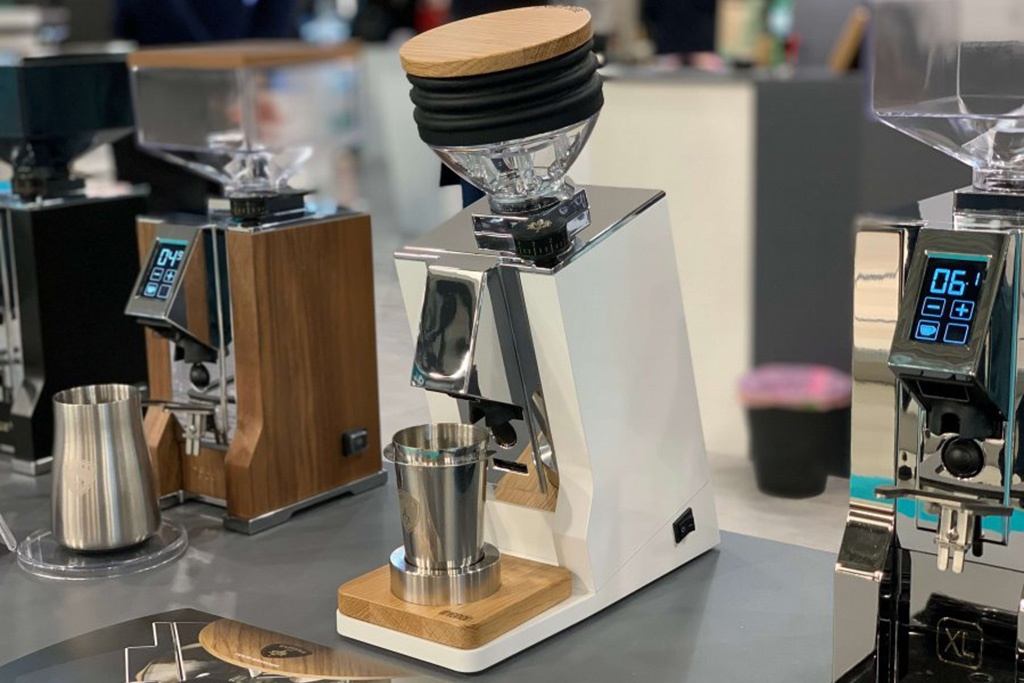
The Mahlkönig X64 SD is one example of this category. Mahlkönig describes it as a single-dose home grinder with micron-level stepless adjustment, zero retention, quiet grinding, 64 mm flat steel burrs, and grind guidance across espresso, filter, and coarse brewing methods.
Why Single Dosing Matters in Professional Coffee
Traditional hopper grinders are built for volume. They are useful in cafés where the same espresso blend is served repeatedly across a busy shift. Beans sit in the hopper, the barista grinds on demand, and the workflow is designed around speed.
Single dosing solves a different problem. It is useful when the operator wants flexibility and control over each dose.
Coffee professionals often use single dosing when they need to:
- Test multiple coffees in one session
- Switch between espresso and filter brewing
- Dial in small samples
- Compare roast profiles
- Avoid hopper staling
- Reduce purge waste
- Serve low-volume specialty coffees
- Train baristas on grind changes
- Create precise brew recipes
- Maintain dose accuracy
This makes single dosing especially valuable in roaster labs, training spaces, high-end home bars, coffee consulting setups, and cafés that offer rotating coffees.
Low Retention Is the Core Requirement
The first thing coffee professionals look for in a single dose grinder is low retention. Retention refers to coffee that remains inside the grinder after grinding.
In a hopper workflow, small retention may be less noticeable because the grinder is used continuously with the same coffee. In single dosing, retained coffee becomes a bigger issue because every dose is weighed individually.
If a grinder retains coffee, several problems appear:
- The output dose may not match the input dose.
- Old grounds may mix with the next dose.
- Grind setting changes may not appear immediately.
- Switching coffees becomes less clean.
- Dial-in adjustments require more purging.
- Freshness becomes harder to control.
For professionals, this affects accuracy. If 18 grams go in, the expectation is that almost the same amount comes out, without carryover from a previous coffee.
Mahlkönig positions the X64 SD around zero retention and includes a bellows system for clearing grounds from the chamber. That makes it relevant for users who frequently switch coffees or brew methods.
Repeatable Grind Adjustment Is Essential
Single dosing often involves frequent grind changes. A coffee professional may move from espresso to pour over, then back to espresso, then test a different roast profile. If the adjustment system is vague, the workflow becomes frustrating.
Professionals need a grinder that can move between settings predictably and return to previous recipes with minimal guesswork.
Good adjustment design should support:
- Fine espresso tuning
- Repeatable reference points
- Smooth movement between brew ranges
- Clear grind setting visibility
- Small changes without overshooting
- Stability once the setting is chosen
This is especially important for espresso. Small grind changes can have a major effect on shot time, flow rate, and flavor. Mahlkönig notes that the X64 SD uses a stepless grind adjustment knob, allowing micron-level changes without fixed steps. It also gives general guidance for espresso, filter, and coarse settings on a 0–12 scale.
Grind Consistency Shapes Brew Quality
A single dose grinder must still do the basic job well: produce consistent grounds. Low retention means little if the particle distribution is poor.
Grind consistency affects extraction because water does not extract every particle equally. Smaller particles extract faster. Larger particles extract more slowly. If the distribution is too wide, the brew can taste both bitter and sour at the same time.
For espresso, inconsistent grinding may cause unstable flow, channeling, and unpredictable shot times. For pour over, it may create muddy drawdowns, weak clarity, or harsh bitterness.
Research on espresso extraction has shown that grind setting and particle behavior strongly affect reproducibility. One study found that very fine grind settings can lead to uneven flow and lower extraction consistency, suggesting that grind distribution and flow behavior are central to reliable espresso. (ScienceDirect)
Coffee professionals look for grinders that make extraction easier to control, not harder.
Burr Quality and Geometry Matter
The burrs are the heart of the grinder. Burr design affects particle distribution, grinding speed, heat generation, flavor clarity, and long-term performance.
Professionals usually evaluate:
- Burr size
- Burr material
- Burr geometry
- Alignment quality
- Replacement availability
- Expected burr life
- Suitability for espresso and filter
Flat burrs are often preferred by users who value clarity and precision. Conical burrs may be preferred by users who like more body or a different flavor profile. Neither is automatically better in every case, but the burr set should match the intended workflow.
The X64 SD uses 64 mm special steel flat burrs. Mahlkönig states that these burrs have an average lifespan of 500 kg of coffee, though wear depends on grind size, bean type, and roast level.
For professional users, that service-life information matters because grinders are long-term tools, not disposable accessories.
Workflow Speed Still Matters
Single dosing is often associated with precision, but professionals still care about speed. A grinder that is accurate but painfully slow can interrupt service, training, or testing sessions.
Workflow speed includes more than grind time. It includes the full process:
- Weighing the beans
- Loading the grinder
- Grinding the dose
- Clearing retention
- Transferring grounds
- Preparing the puck or brewer
- Adjusting settings
- Cleaning between coffees
A good single dose grinder should keep this process smooth. If the workflow requires too many steps, it may not work well in a professional environment.
For example, a roaster cupping lab may need to grind many samples in sequence. A barista trainer may need to demonstrate several grind changes quickly. A small café offering rotating espresso options may need precision without slowing service too much.
Static Control Affects Cleanliness and Dose Accuracy
Static may seem like a small annoyance, but it matters in single dosing. Static can cause grounds to cling to the chute, dosing cup, or counter. This creates mess and may affect dose accuracy.
Professionals look for systems that control static through grinder design, workflow accessories, or practical techniques.
Static problems can lead to:
- Grounds sticking inside the chute
- Messy counters
- Inconsistent output weight
- More cleaning between doses
- Slower workflow
- Cross-contamination between coffees
Some users use a small water droplet technique, often called RDT, to reduce static before grinding. Others prefer grinders with designs that naturally reduce static buildup.
The goal is simple: get the dose out cleanly and consistently.
Clean Bean Switching Is a Major Advantage
One of the biggest reasons professionals choose single-dose grinding is the ability to switch coffees cleanly.
This matters in several settings:
- A roaster is testing different sample roasts
- A café offering a rotating single-origin espresso
- A trainer comparing grind response between coffees
- A consultant evaluating brew recipes
- A home enthusiast moving between decaf and regular beans
- A competition barista testing small lots
With a hopper grinder, switching coffees usually requires purging old beans and grounds. That creates waste. In a single dose workflow, the user weighs exactly what is needed and grinds only that amount.
Low retention makes this cleaner. If the grinder holds old grounds, the next coffee may be contaminated by the previous one. That can distort tasting results.
Espresso and Filter Range Flexibility
Some single dose grinders are espresso specialists. Others are better for filter. Coffee professionals often look for range flexibility because they may need one grinder to support several brewing methods.
A flexible grinder should handle:
- Fine espresso
- AeroPress
- Pour over
- Batch brew
- Cupping
- French press
- Cold brew settings
The X64 SD is positioned as an all-round grinder for espresso and coarser brew methods. Mahlkönig’s guidance places espresso roughly between 0 and 2, filter between 2 and 7, and coarse settings between 7 and 12, while noting that exact settings vary by coffee and roast level.
For professionals, this flexibility can reduce the need for multiple grinders in smaller spaces.
Dose Accuracy Supports Recipe Control
Professional coffee work depends on recipe control. If the dose changes unintentionally, the recipe changes.
For espresso, a small dose difference can affect puck resistance, flow rate, and extraction. For pour over, dose inconsistency changes brew ratio and strength. For tasting work, dose variation can make comparisons unfair.
Single dosing gives users a clear dose-in, dose-out workflow. But that only works if the grinder supports accurate output.
A good single dose system should help maintain:
- Accurate input weight
- Minimal retained grounds
- Clean output transfer
- Low exchange between doses
- Repeatable workflow
Dose accuracy is one reason professionals often pair single dose grinders with scales, dosing cups, and clear recipe tracking.
Build Quality and Serviceability Matter
Coffee professionals also care about durability. A grinder may perform well out of the box, but professional value depends on how it holds up over time.
Important build factors include:
- Motor quality
- Burr access
- Ease of cleaning
- Adjustment stability
- Internal construction
- Availability of parts
- Brand service network
- Long-term reliability
Mahlkönig recommends regular cleaning with food-safe grinder cleaner and notes that grinder condition can affect grind fineness and temperature over time.
For professionals, maintenance is not optional. Old coffee oils, retained particles, and dirty burrs can affect flavor and consistency.
Noise and Footprint Are Practical Considerations
Not every professional setup is a large café. Many single-dose grinders are used in home bars, offices, training rooms, roaster labs, pop-ups, and small counters.
In these environments, noise and footprint matter.
A grinder that is too loud may not work well in an office or hospitality setting. A large grinder may not fit a compact counter. A grinder that is difficult to move or clean may become frustrating in flexible setups.
Mahlkönig describes the X64 SD as having a small footprint and whisper-quiet grinding, which fits the use case for precision-focused users working in tighter spaces.
Workflow Comparison: Hopper vs Single Dose
| Factor | Hopper Grinder | Single Dose Grinder |
| Best For | High-volume repeated service | Flexible, precise, small-batch use |
| Bean Storage | Beans sit in the hopper | Beans were weighed per dose |
| Retention Impact | Less obvious with the same coffee | Critical for clean switching |
| Coffee Switching | Requires purging | Easier and less wasteful |
| Dialing In | Efficient for one main coffee | Useful for frequent recipe changes |
| Freshness | Depends on hopper usage | Strong dose-by-dose freshness |
| Professional Use Case | Busy café espresso bar | Roaster lab, training, home bar, rotating coffees |
Both systems have value. The better choice depends on the workflow.
What Professionals Look for Before Buying
Before choosing a single-dose grinder, coffee professionals usually ask practical questions:
- How much coffee does it retain?
- Can it return to previous settings easily?
- Does it grind consistently for espresso?
- Can it handle filter methods well?
- Is it easy to clean?
- Does it create static or mess?
- Is the workflow fast enough?
- Are the burrs serviceable?
- Is the grinder stable during repeated use?
- Does the footprint fit the workspace?
- Does the grinder support the intended roast styles?
These questions matter more than broad claims. A grinder must match the real workflow, not just the spec sheet.
When Single Dosing Makes the Most Sense
Single dosing is ideal when flexibility matters more than pure volume.
It makes sense for:
- Home baristas using multiple coffees
- Roasters testing samples
- Trainers demonstrating grind changes
- Small cafés offering rotating coffees
- Coffee professionals comparing recipes
- Offices with varied coffee preferences
- Users who brew espresso and filter coffee with one grinder
It may make less sense for high-volume café bars serving one blend continuously. In that setting, a commercial hopper grinder may still be more efficient.
Conclusion
Coffee professionals look for single dose grinding systems that combine low retention, consistent particle distribution, precise adjustment, workflow speed, clean dosing, and reliable build quality. Single dosing is not only about freshness. It is about control.
A good single dose workflow allows users to test coffees, switch beans, dial in recipes, reduce waste, and maintain accuracy across espresso and filter brewing. For professionals working with multiple coffees or smaller batches, that level of control can be more valuable than hopper-based speed.
The Mahlkönig X64 SD fits this conversation because its single-dose design, 64 mm flat burrs, stepless micron-level adjustment, low-retention workflow, and compact build align with what precision-focused users typically look for. The right grinder does not replace skill, but it gives professionals a cleaner, more repeatable foundation for making better coffee.