Refrigeration plays a major role in the operation of today’s retail and food businesses. The correct refrigeration system will not only aid in preserving perishable products, but also aid in organizing the inventory, maintaining food safety, presenting the food products and reducing the cost of operating the system. Supermarkets, convenience stores, restaurants and specialty retailers are all constantly looking to maximize the effectiveness of their business, and it has become essential to invest in advanced refrigeration technology to improve store performance and ensure a consistent product quality.
-
Smart Refrigeration Improves Everyday Store Operations
Commercial store refrigeration systems are always on and always under extreme conditions. Whether it’s displaying beverages or maintaining the quality of frozen products, refrigeration systems are essential to operations, inventory management, and customer satisfaction.
New systems are designed to provide a constant temperature and to be more energy efficient than older systems. Digital monitoring, improved air circulation and efficient compressor technologies help companies reduce and prevent energy waste and ensure product freshness.
A well-planned refrigeration layout can also provide faster turnovers, better employee mobility, and increased access to products. Many businesses now view refrigeration as part of their operations’ strategy to optimize the working efficiency in the store.
-
Selecting Refrigeration Solutions for Different Retail Needs
Refrigeration systems vary for different types of businesses, depending on the product being sold. This allows the appropriate equipment to be used to meet operational requirements to improve efficiency and to ensure the appropriate storage conditions for the various categories of food.
Common Commercial Refrigeration Options
-
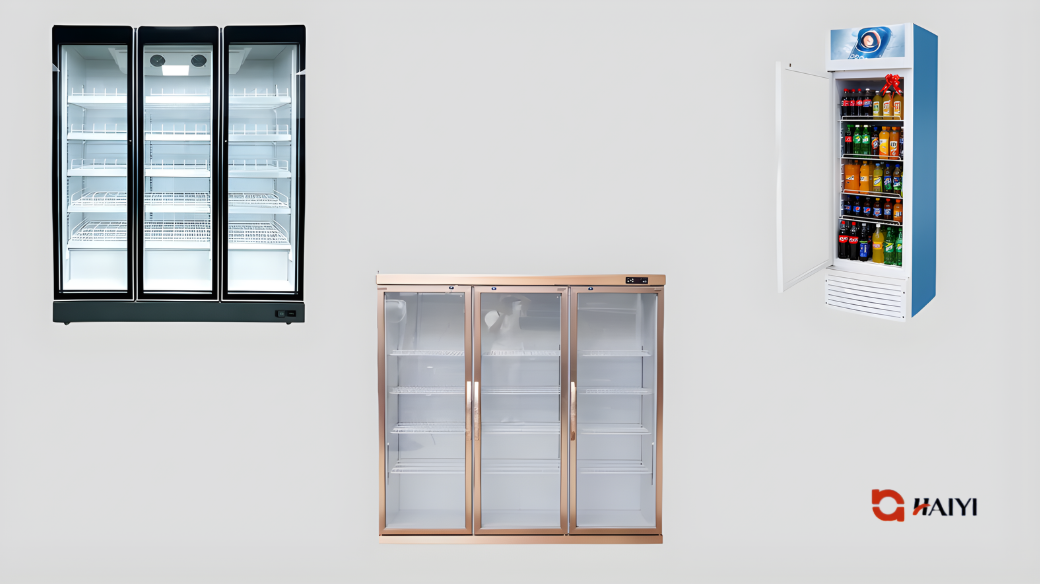
Beverage Coolers are used to store bottled and canned beverages in an organized and prominent way in supermarkets, convenience and retail locations.
-
Multideck Open Chillers allow customers to see and access dairy products, beverages, fruits and ready-to-eat foods with ease, while providing efficient merchandising.
-
Meat Showcase is a beautiful, cool and convenient product showcase for meat shops and fresh food shops.
-
Upright Display Freezers maximize vertical space usage and allow customers to view frozen products through the glass doors easily.
-
Island Freezers are a large capacity frozen food storage solution with easy access in retail stores with high-volume food needs.
-
Cake Display Chillers are suitable for bakeries, cafés and dessert stores as they allow refrigeration and elegant presentation.
-
Ice Cream Display Freezers are engineered to maintain the freezing temperature and to display the products to promote impulse purchases.
-
Food distribution companies, supermarkets and restaurants utilize Deep Freezers for long-term frozen storage.
-
Choosing the right equipment for the product can help businesses to keep the product fresh and maximize the use of the space they have to provide to their customers.
Choosing equipment according to product type helps businesses maintain freshness while making the best use of available retail floor space.
-
Investing in Commercial Refrigeration Equipment for Long-Term Performance
When it comes to commercial refrigeration equipment, it’s not simply about cooling requirements; it’s an investment. For many years of operation, reliable refrigeration will help to preserve inventory, provide stability and reduce maintenance interruptions.
Under different operating conditions, food product temperature can be controlled with advanced refrigeration systems to minimize temperature fluctuations that affect food quality. Uniform cooling is important for products such as meat, dairy products, frozen foods, beverages and bakery products, where shelf life depends on the temperature uniformity of the product.
Modern devices also have facilities which make maintenance more easy and the operation simpler. Maintenance people can perform maintenance operations more efficiently, and the accessibility of the components and rugged design minimize downtime and reduce the need for maintenance.
Internationally certified equipment that meets recognized quality and safety standards is also a key consideration for many businesses. Companies that have been manufacturing and distributing products for a long time and have experience across the engineering world have a habit of providing solutions engineered for use in a variety of business environments.
-
Energy Efficiency Creates Sustainable Cost Savings
One of the highest running costs for food retailers is for energy. Refrigeration systems run 24/7, and efficiency gains are particularly important in the long term.
There are several technologies that are used in modern refrigeration equipment that help to reduce energy use without compromising cooling.
Features That Improve Energy Efficiency
-
Compressors with high efficiency decrease the electric energy consumption.
-
Improved insulation minimizes temperature loss.
-
Optimized air flow allows for uniform cooling in the cabinet.
-
LED lights can help to save energy and make the products more visible.
-
Digital temperature controls ensure accurate operating temperature.
-
Good door sealing minimizes cold-air leakage.
These advantages can help businesses become more sustainable, save on running costs and minimize wasted energy.
Well-maintained equipment also contributes to increased efficiency. Cleaning the condenser, checking the door gasket, and routine maintenance work are essential in maintaining the optimum performance of the refrigeration system during its useful life.
-
Store Layout and Product Visibility Work Together
Refrigeration equipment plays a major role in the way that customers move around a retail environment. With proper placement, everything is more easily accessible, and traffic flow is enhanced around the store.
Refrigeration units, which are open for the consumer to access more frequently purchased items, are also open displays and can be used for beverages, dairy products and ready-to-eat items. Glass-door freezers provide a compromise between visibility and energy efficiency, enabling customers to see products without having to open the doors.
Vertical display units allow for more merchandising in areas where floor space is limited, and island freezers can serve as a central frozen food promotion display area.
Better inventory rotation, too, with good refrigeration planning. Well-organized shelves will allow for easy restocking and allow for a first-in-first-out policy to be followed, reducing the likelihood of out-of-date products hanging around.
Refrigeration systems are no longer just appliances but merchandising tools that help to increase efficiency and effectively showcase products.
-
Choosing a Reliable Refrigeration Manufacturing Partner
Design of the refrigeration equipment is not the only critical aspect of quality, but also the skill involved in the equipment’s manufacture. Businesses usually take into consideration engineering capability, manufacturing standards, certifications and long-term support when examining suppliers.
Those companies that have been in the refrigeration industry for decades are generally capable to supply a bigger range of products that can be utilized in supermarkets, restaurants, retail chains, food distributors and specialty stores. International certifications, such as CE, UL, ETL and ISO, are proof of compliance with quality and safety standards, which helps to build trust in the reliability of equipment.
This is the method adopted by commercial refrigeration manufacturers like HAIYI that offers full solutions in commercial refrigeration, including beverage coolers, display freezers, open chillers, specialty showcases and deep freezers. The company has more than 20 years of manufacturing experience and has exported to more than 80 countries. With many years of research in refrigeration technology, the company’s main features are reliable cooling performance, energy-efficient engineering and solutions suitable for a wide range of commercial applications.
Additionally, businesses should look for technical support, installation services, availability of products, ease of maintenance, and reliability of operation when choosing a refrigeration partner. All these factors have a significant effect on equipment value maximization throughout the equipment’s life cycle.
Conclusion
Good refrigeration is essential to any retail/food service operation. Direct impacts on food safety, merchandising, product quality and energy saving, among others, can result in smoother daily operations and better business performance with modern refrigeration systems.
Through the selection of equipment to suit product requirements, store design, and future business objectives, companies can maximize efficiency and protect valuable product inventory. Retailers can take advantage of the knowledge and experience of trusted manufacturers and invest in trusted refrigeration technology to build reliable and stable cold chain operations to ensure consistent performance, operational stability and sustainable commercial development.