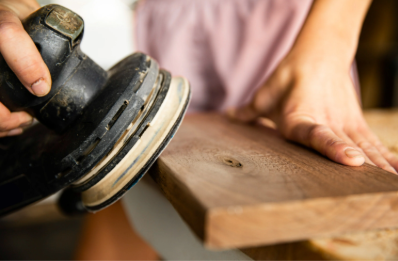
If you’ve ever spent hours changing sandpaper on a manual disc, you know how frustrating it can be to lose momentum during a critical project. The hook and loop fastening system, often compared to Velcro, revolutionized the abrasives industry by allowing users to swap sanding discs in seconds. Whether you are a professional woodworker or a DIY enthusiast, this design eliminates the need for adhesives or clamps, providing a secure attachment that prevents slipping under high-speed rotation. The real advantage? Consistent surface quality from start to finish, because the disc stays flat and evenly tensioned across the backing pad. For anyone seeking efficiency and precision in grinding, polishing, or finishing applications, understanding how hook and loop technology works is the first step toward better results.
Why Hook and Loop Discs Stand Out in Modern Abrasive Systems
The genius of the hook and loop design lies in its dual-layer structure. One side features thousands of tiny nylon hooks, while the other has a soft loop fabric. When pressed together, these components interlock to create a strong yet reusable bond. In abrasive discs, the loop backing is bonded directly to the sanding material, while the hook face is attached to the backing pad of your sander. This configuration offers three major benefits: rapid disc changes without tools, even pressure distribution across the work surface, and the ability to reuse the backing pad for hundreds of disc swaps. For workshops in Türkiye where both speed and cost-efficiency matter, this system reduces downtime and material waste significantly. Additionally, because the discs are self-centering when pressed onto the pad, beginners can achieve professional-level flatness without guesswork.
However, not all hook and loop products are created equal. The durability of the connection depends heavily on the quality of the hooks and the density of the loop fabric. Low-quality discs may lose their grip after a few uses, leading to disc slippage that ruins your workpiece. That is why it is essential to source abrasives from a brand that tests its hook and loop adhesion under real-world operating conditions. When shopping online, look for systems that guarantee at least 50 attachment cycles without significant loss of holding power. A reliable supplier will also offer a range of grit options—from coarse 40-grit for heavy material removal to fine 400-grit for finishing—all compatible with standard 125 mm and 150 mm backing pads.
When you invest in a high-quality hook and loop system, you are also investing in your own productivity. Imagine switching from sanding to polishing in under five seconds without leaving your workstation. That seamless workflow is exactly what modern professionals demand. For hobbyists working on furniture restoration or automotive refinishing in Türkiye, this means more time perfecting the surface and less time fighting with outdated attachment methods.
Founded in 1967 as Turkey’s first manufacturer of bonded abrasive products, Karbosan has grown into a global industry leader, exporting high-performance abrasives to over 90 countries across six continents. Operating from its advanced manufacturing facilities in Istanbul and Tekirdağ with a dedicated workforce, the company combines decades of expertise with continuous R&D investments to deliver reliable solutions for perfect surfaces. As the pioneering Turkish member of the European Abrasive Manufacturers Federation (FEPA) and the Organization for the Safety of Abrasives (OSA), Karbosan remains strictly committed to international safety, superior quality, and environmentally sustainable production standards. When choosing hook and loop discs for your next project, you can trust that this heritage ensures consistent performance, whether you are in a professional workshop in Ankara or a garage studio in İzmir.