Introduction
Selecting the right wear parts for high-horsepower FAE mulching heads is a critical decision for forestry, utility right-of-way, and agricultural professionals. These heavy-duty attachments demand tools capable of handling extreme torque, severe shock loads, and highly abrasive environments. To maintain peak productivity, fleet operators must understand the structural and mechanical factors that define compatibility and performance when upgrading their cutting tools.
Stress Distribution and Bolt-On Interfiace Integrity
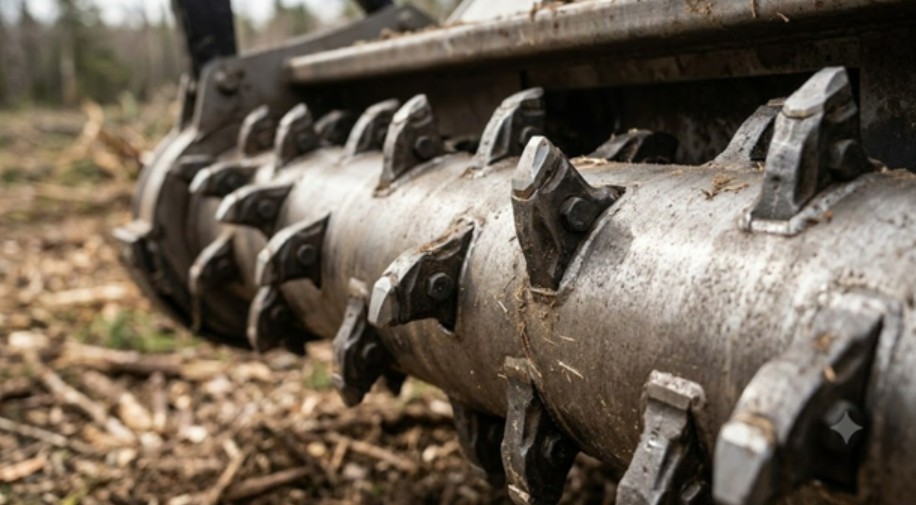
The mechanical interface where the cutting tooth meets the holder pocket on an FAE rotor experiences immense shear forces during operation. Cheap, poorly fitted teeth often have slight dimensional variances at the seat or bolt hole, which prevents them from seating flush within the pocket.
IMPACT FORCE
│
▼
┌───────────┐
│ CARBIDE │
└─────┬─────┘
│ ◄─── Shear stress localized on the bolt if
┌─────┴─────┐ the tooth is not perfectly seated flush
│ HOLDER │ in the pocket.
└───────────┘
When a non-flush tooth hits a solid rock or stump, the impact stress is concentrated entirely on the retaining bolt rather than being distributed across the pocket seat. This leads to bolt deformation, sheared threads, and eventually the loss of the entire tool. Premium aftermarket fae mulching head teeth are engineered with precision-milled mounting profiles to ensure a perfect flush fit, transmitting impact energy safely back into the robust structural body of the rotor rather than the bolt.
Thermal Resilience in Heavy-Duty Clearing
Continuous mulching in hard woods produces intense friction, pushing tool temperatures up to extreme levels. Cheap tools soften under this heat, leading to rapid wear and carbide loss.
Premium replacement teeth combat this by using cobalt-rich braze alloys that retain their structural holding power even at elevated temperatures, keeping your machines running longer in the toughest conditions.