Customer expectations have evolved dramatically over the past few years. Modern customers expect personalised interactions, faster response times, seamless experiences across multiple channels, and consistent communication throughout their journey.
As a result, businesses are moving beyond traditional CRM systems and investing in connected digital ecosystems that provide a complete view of customers, operations, and business performance.
Salesforce has emerged as one of the leading platforms supporting this shift. Rather than serving as a simple customer database, Salesforce now functions as a central hub that connects sales, marketing, customer service, analytics, and business processes into a unified environment.
For organisations looking to improve customer engagement and operational efficiency, building a well-integrated Salesforce ecosystem has become a strategic business priority.
The Shift from CRM to Customer Experience Platforms
Traditional CRM systems were primarily designed to store customer information and track sales activities. While these functions remain important, modern businesses require much more sophisticated capabilities.
Today’s organisations need platforms that can:
- Connect multiple departments
- Provide real-time customer insights
- Automate repetitive tasks
- Support personalised communication
- Integrate with existing business systems
- Deliver actionable analytics
Salesforce enables businesses to create connected customer experiences by bringing together data, workflows, and customer interactions within a single platform.
This holistic approach helps organisations make better decisions and deliver more consistent customer experiences.
Why Salesforce Consultation Matters
Many businesses invest in Salesforce but fail to unlock its full potential because the platform is not configured around their specific business objectives.
Professional Salesforce consultation helps organisations evaluate their requirements, identify opportunities for improvement, and design a Salesforce environment that aligns with their long-term goals.
A strategic Salesforce consultation process can help businesses:
- Improve CRM adoption
- Optimise sales processes
- Enhance customer engagement
- Streamline workflows
- Improve reporting capabilities
- Support digital transformation initiatives
By aligning Salesforce capabilities with business objectives, organisations can maximise their return on investment while improving operational efficiency.
Integration Is the Key to Business Agility
Modern businesses rarely rely on a single software platform. Most organisations use multiple systems for finance, marketing, ecommerce, customer service, inventory management, and business operations.
Disconnected systems often create data silos, duplicate processes, and inefficiencies that affect productivity and customer experience.
This is where Salesforce integration services play a critical role.
Integrating Salesforce with other business applications helps organisations:
- Centralise customer information
- Improve data accuracy
- Automate business processes
- Enhance team collaboration
- Eliminate manual data entry
- Gain real-time visibility across departments
Businesses that invest in Salesforce integration services often experience improved operational agility and more efficient decision-making.
Also Read: AWS vs Azure Comparison for Modern Businesses
Creating a Single Source of Truth
One of the biggest challenges organisations face is managing customer data across multiple systems.
When information is fragmented, teams may struggle to access accurate customer records, resulting in inconsistent communication and poor customer experiences.
A well-integrated Salesforce ecosystem helps create a single source of truth for customer information.
This allows sales, marketing, and support teams to access consistent and up-to-date information, enabling them to deliver more personalised and effective customer interactions.
As businesses continue expanding their digital operations, access to reliable data becomes increasingly important for maintaining competitive advantage.
Supporting Growth Through Automation
Business growth often creates additional operational complexity. As customer volumes increase, manual processes become more difficult to manage efficiently.
Salesforce offers powerful automation capabilities that help organisations streamline workflows and improve productivity.
Examples include:
- Lead assignment automation
- Customer onboarding workflows
- Service request routing
- Marketing campaign automation
- Approval processes
- Reporting and analytics automation
Automation reduces administrative workloads and allows employees to focus on higher-value activities that contribute to business growth.
Why Salesforce Support and Maintenance Is Essential
Implementing Salesforce successfully is only the beginning. To ensure long-term performance and reliability, businesses must invest in ongoing Salesforce support and maintenance.
As business requirements evolve, Salesforce environments require continuous optimisation, monitoring, and updates.
Professional Salesforce support and maintenance services help organisations:
- Resolve technical issues quickly
- Optimise platform performance
- Manage updates and releases
- Improve user adoption
- Maintain integrations
- Enhance security
- Support evolving business processes
Without proactive support, businesses may experience performance challenges that reduce platform effectiveness and impact user satisfaction.
Future-Proofing Business Operations
Technology continues to evolve rapidly, and businesses must remain adaptable to changing customer expectations and market conditions.
A well-managed Salesforce ecosystem provides organisations with the flexibility to introduce new technologies, expand capabilities, and respond to emerging opportunities.
Businesses that invest in Salesforce consultation, integration, and ongoing support are often better positioned to:
- Improve customer experiences
- Increase operational efficiency
- Enhance business agility
- Support innovation
- Drive sustainable growth
This flexibility is becoming increasingly important as digital transformation initiatives continue across industries.
Final Thoughts
Salesforce has evolved far beyond its traditional CRM roots. Today, it serves as a powerful platform that helps businesses create connected customer experiences, improve operational efficiency, and support long-term digital transformation.
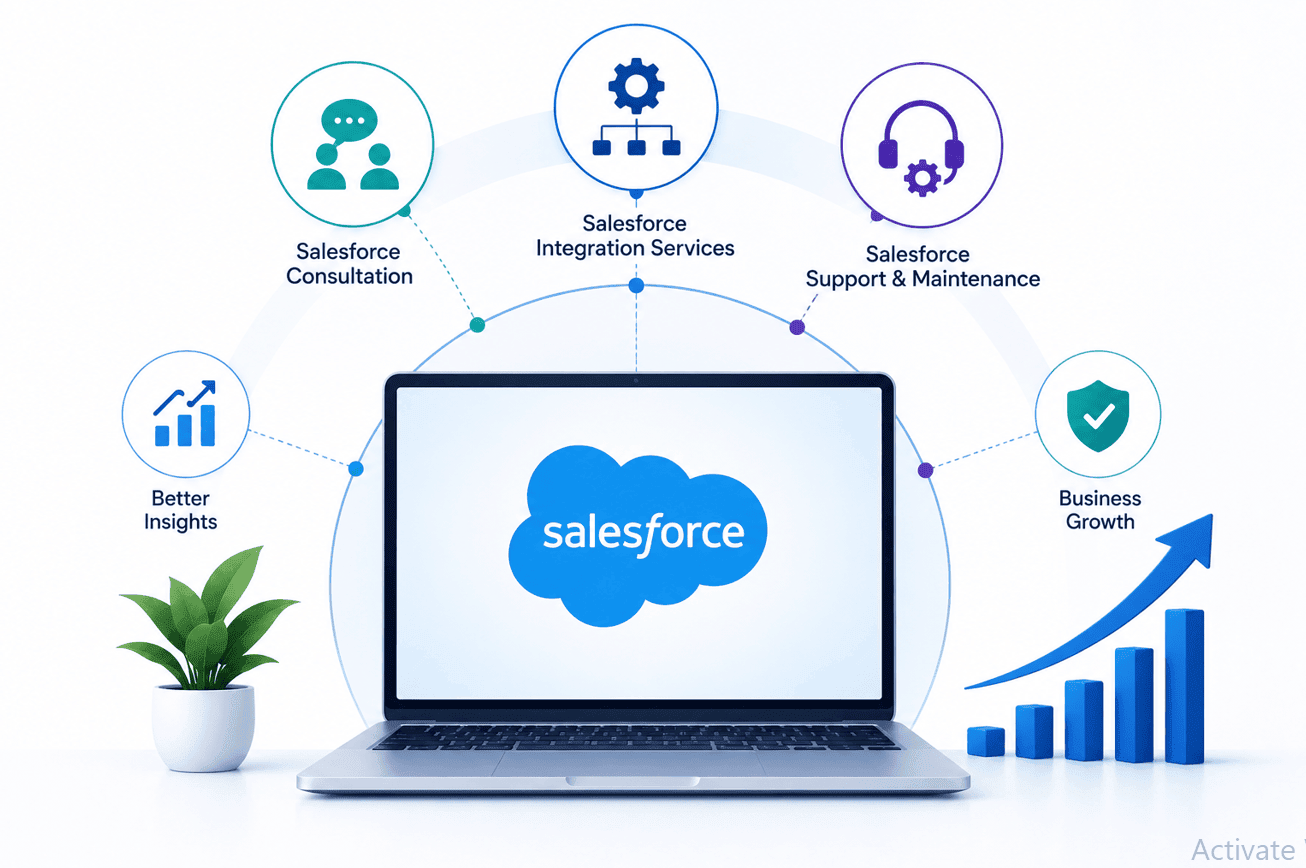
Organisations that invest in strategic Salesforce consultation, robust Salesforce integration services, and proactive Salesforce support and maintenance can unlock greater value from their Salesforce environment while building a stronger foundation for future growth.
As customer expectations continue to rise, businesses that prioritise connected ecosystems rather than isolated systems will be better equipped to compete, innovate, and succeed in an increasingly digital marketplace.