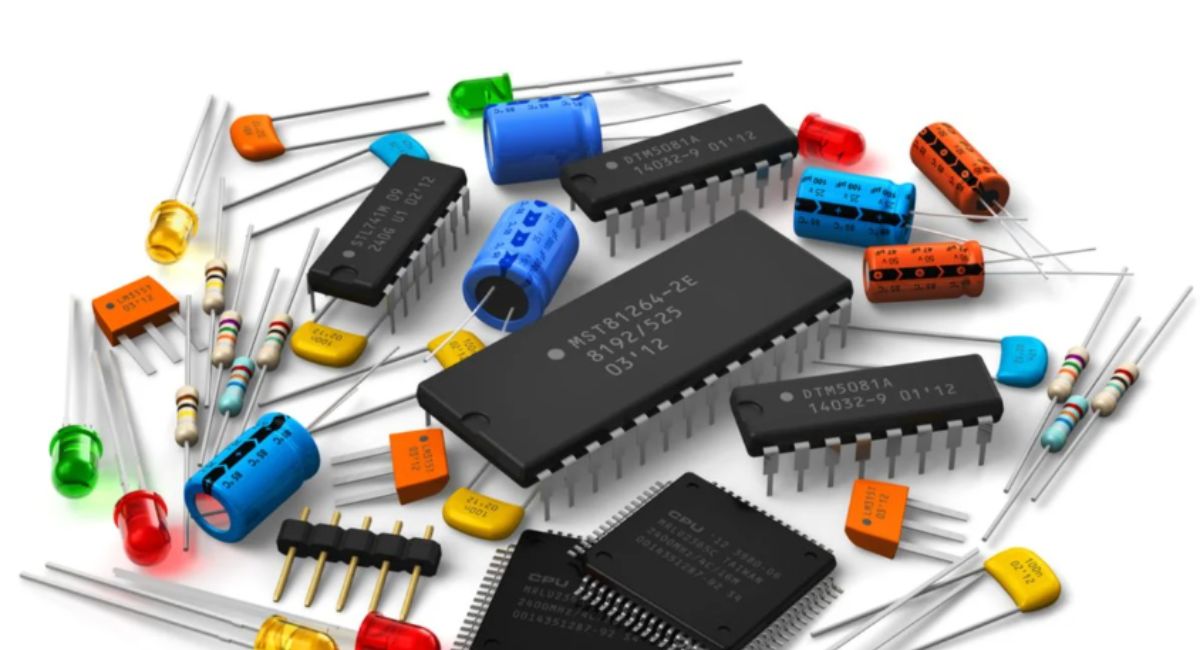
I recall reading a very sad story of a procurement manager who spent 3 weeks searching for one capacitor. In that story, the capacitor in question was not a obscure military part nor an obsolete sensor. It was simply a capacitor, available from any mfr around the world. The worst part was that the original mfr had moved the part to a new production site. All distributors were 6 months back-ordered. The quotes from the gray market looked too good (read: suspicious) to be true. Unfortunately, after 3 weeks of searching, the procurement manager was unable to find the part. Her design team and customers were waiting for the part and she was spending her time reading her email, hoping to get a reply from a supplier within minutes of sending them an email.
The story of the colleague spending three weeks searching for a capacitor is not a strange or unusual story. However, the tendency to treat issues with finding missing parts from time to time as if they were anomalies, is part of the problem. We are too willing to expose our poor electronic component sourcing practices to the world when they fail and then write them off as errors. There are many avoidable problems waiting to happen.
What actually makes a component “hard to find”
So in summary, there are a few problems wrapped under the single term ‘hard to find’. These problems all have to be addressed separately.
- Obsolete parts: The manufacturer has end-of-lifed the component, meaning no new production runs. What’s left in the channel is what exists.
- Constrained parts: Still in production, but demand has outpaced supply. Lead times stretch from weeks to months to “we’ll call you.”
- Allocation-only parts: Available, but only to customers with long-term purchase agreements or preferred status. Everyone else gets rationed.
- Single-source parts: Only one manufacturer makes it. No competitive alternatives. No leverage.
Each of these causes has different effects on the procurement, engineering and design processes of a company. Therefore, each of these hard-to-find parts needs to be tackled by a company in a different way. Strategies for dealing with shortages, obsoletizations, non-compliance and counterfeits must be designed and put into practice individually.
The myth of the reliable supply chain
The common view of a supply of components that are used in a design is that they will also be available for purchase after the part has gone into production. This would mean that the procurement team have built up a good relationship with the supplier, negotiated the best terms and conditions and then placed repeat orders as necessary. Never giving a moment’s thought to the part’s supply as it had been thoroughly vetted before it was approved for use. But, things have changed.
Geopolitical pressure, Fab Shutdowns, and huge spikes in demand during the global pandemic have found cracks in the pavement of distribution – the model of procurement based on the best case has simply not bent it has broken.
A number of things about supply chains are not understood. For a long time it was acceptable practice to establish a list of approved suppliers and then deal with them from time to time. However this simple model does not account for reality. In reality some parts become critical only when they cannot be sourced. A good sourcing strategy anticipates this event.
(And yes, I know “build resilience” is the obvious answer. But obvious answers and implemented answers are not the same thing, which is exactly the gap worth examining.)
Strategies that actually hold up under pressure
We will address how we manage our stock of components for future problems, in order to avoid current crises.
First, make changes to your design before they become problems with your current production. If you have a part on your BOM that is single-sourced or if the part is already allocated and you see signs that it will become a problem in the future, have a discussion with your engineers to design around the part before the time comes and the rest of the team gets frustrated because of a single part that can’t be sourced for production. This is harder to get your engineering team to agree to than finding an alternate part for use in your current design but it will pay off in the long run.
As for your second option for dealing with critical components, independent distributors (also known as distributors, wholesalers, or resellers) can be an effective way to source a back ordered or obsolete part. Yes, there is a risk of encountering counterfeit parts, however, at FusionWW we work with independent distributors who provide full traceability of the part in question. We can also provide support for 3rd party testing to verify authenticity of the part. So, while there is some risk, it is greatly mitigated when working with a reputable independent distributor. Also, sourcing through an independent distributor can be much more efficient than searching the web at 11 PM for a part needed the next day for production.
Third, a buffer stock of components is not excess inventory. The cost of stock piling a large quantity of a part is likely to be less than the cost of a line down due to lack of a critical component. The team can then work out the cost of holding 6 months’ worth of say resistors against the cost of a line down due to lack of resistors. This kind of smart resource planning helps businesses reduce operational risks and maintain production continuity.
A quick comparison: reactive vs. proactive sourcing posture
| Factor | Reactive sourcing | Proactive sourcing |
| Response to shortage | Scramble, pay spot premiums | Draw from buffer stock or pre-qualified alternates |
| Supplier diversity | One or two authorized distributors | Mix of authorized, independent, and direct |
| Obsolescence handling | Discovered at reorder point | Monitored continuously, redesign initiated early |
| Cost profile | Volatile, unpredictable spikes | Higher baseline, but far fewer catastrophic costs |
How much do counterfeit components affect your supply chain?
The largest numbers of counterfeit components are found to infiltrate a supply chain during times of: (1) parts shortages, (2) obsolete components. When a component becomes scarce it is no longer available from normal channels or is available from unknown or suspicious sources at below market prices. The situation of purchasing critical components for production is already stressful; the added stress of having to hunt down parts has led to many procurement groups being taken advantage of by distributors and brokers of suspect components. Components are often being purchased for production without adequate scrutiny of the parts’ documentation or without testing for authenticity.
Testing, full documentation and knowledge of a distributor’s inventory source are key factors in avoiding counterfeit parts. Make sure your independent distributors can meet these requirements and don’t seem evasive when you ask for information on the origin of a part.
- Request full traceability documentation before committing to a purchase.
- Require third-party inspection for high-risk or high-value components.
- Build counterfeit risk into your supplier qualification process, not just your incoming inspection.
Test, traceability documentation, how inventory is distributed by independent distributors (where was it acquired, does the seller have adequate inventory to supply you): these are all things you can establish prior to entering shortage mode, and do establish these if you wish to have any leverage when it counts.
The Human Element: What Most Teams Miss
This finally brings us to the “human side” of sourcing – that so many have ignored in building their very efficient, software enabled procurement workflows. That a good relationship with suppliers (and informal “off the record” discussions with their representatives) can enable you to identify issues with critical components before they actually become problems. No software or automated tool can replicate the visibility provided by market intelligence – and that such information generally travels very quickly – often through unofficial channels — before making its way into formal lead time updates that typically are somewhat behind current reality.
There is no software to replicate the work of human networking in the procurement space. All of the work that has gone into automating procurement workflows, and into providing “procurement visibility” has failed at the simple task of having a 10 minute call with a distributor’s rep to ask if they have a part in stock. The rep wants to help you.
My colleague was able to track down the needed capacitor, a pretty hard to find part, from an independent distributor that she had been establishing a relationship with almost two years prior – almost as an afterthought. That relationship was by far the best resource for her and the procurement team. And within a week of starting her search, she had found the component she needed, all fully documented and tested.