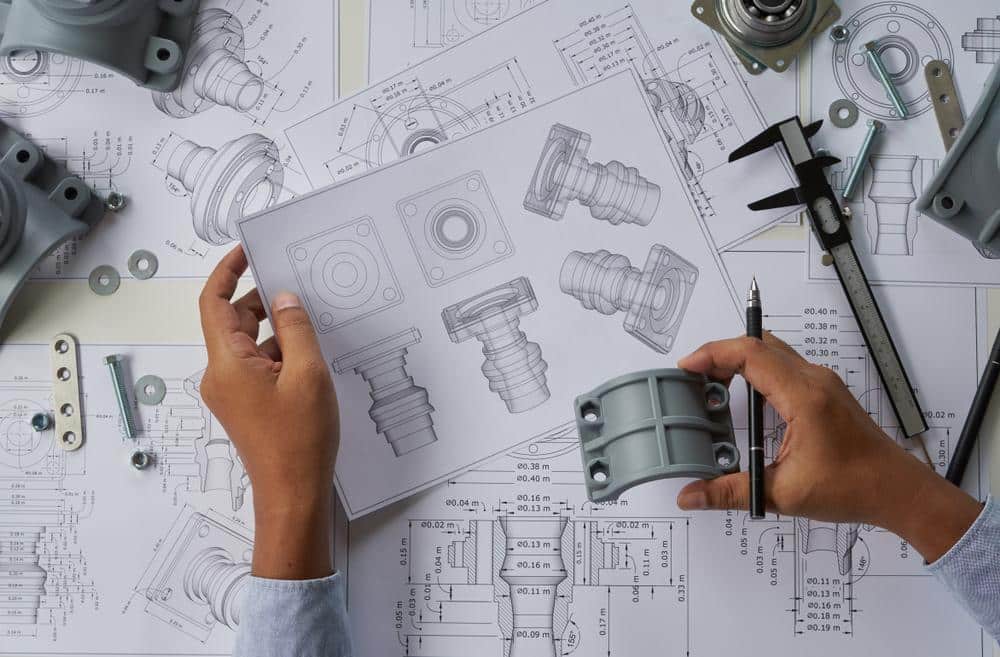
Material selection is one of the most important decisions in industrial product development. The right material affects strength, durability, manufacturing efficiency, and long-term performance. Choosing wisely can reduce maintenance costs, improve product reliability, and streamline production. Understanding the key factors involved allows manufacturers to create products that meet demanding operational requirements while maximizing overall value.
Understand the Product’s Functional Requirements
Every industrial product serves a specific purpose, and the material must support that function throughout its expected service life. Before comparing material options, engineers should clearly define the product’s operating conditions, load requirements, environmental exposure, and expected lifespan.
Mechanical properties such as tensile strength, hardness, ductility, impact resistance, and fatigue performance should align with the intended application. For example, components exposed to repeated stress cycles require materials capable of resisting fatigue, while products subjected to heavy loads demand exceptional structural strength.
Environmental conditions also influence material performance. Products operating outdoors, in humid environments, or around chemicals may require corrosion-resistant materials that maintain their integrity over time. Likewise, applications involving extreme temperatures require materials that retain their mechanical properties without significant degradation.
Understanding these functional requirements early helps narrow material choices before manufacturing begins, reducing redesigns and minimizing production delays.
Consider Safety and Regulatory Requirements
Many industrial sectors must comply with industry-specific standards governing safety, environmental impact, and product performance. Material selection should support compliance while maintaining the desired balance between performance and cost.
Documenting these requirements during the design phase ensures that every selected material contributes to both operational success and regulatory adherence.
Balance Performance With Manufacturing Efficiency
High-performance materials are not always the most practical choice. While premium materials may offer exceptional strength or durability, they can increase manufacturing complexity, machining time, and overall production costs.
Manufacturers should evaluate how easily a material can be processed using available fabrication methods. Factors such as machinability, weldability, formability, and finishing characteristics all influence manufacturing efficiency.
For operations utilizing laser cutting in Utah, selecting materials that produce clean, accurate cuts while minimizing heat distortion can significantly improve production consistency and reduce secondary finishing requirements.
Material availability is another important consideration. Readily available materials often provide shorter lead times and greater supply chain stability than specialized alloys with limited sourcing options.
Optimize Total Cost Instead of Initial Price
The least expensive material is not always the most economical over the product’s lifecycle. Maintenance costs, replacement frequency, manufacturing efficiency, and product reliability all contribute to the total cost of ownership.
Evaluating long-term value instead of focusing solely on material pricing often results in more sustainable business decisions.
Evaluate Durability and Environmental Resistance
Industrial products frequently operate under demanding conditions that challenge material performance. Abrasion, moisture, ultraviolet exposure, chemicals, vibration, and fluctuating temperatures can gradually reduce component effectiveness if unsuitable materials are selected.
Corrosion resistance should be carefully evaluated for applications exposed to moisture, salt, or industrial chemicals. Surface treatments and protective coatings can enhance durability, but selecting inherently resistant materials often provides better long-term reliability.
Wear resistance is equally important for moving components or products exposed to continuous friction. Materials with excellent hardness and abrasion resistance help extend service life while reducing maintenance intervals.
Match Materials to Operating Conditions
Rather than selecting materials based on general reputation, engineers should analyze the specific conditions each component will encounter throughout its lifecycle.
Testing materials under simulated operating environments helps identify potential weaknesses before full-scale production begins, minimizing costly failures after deployment.
Prioritize Manufacturability and Design Compatibility
Material selection should complement the overall product design rather than complicate manufacturing processes. Even high-quality materials may create production challenges if they are difficult to machine, weld, bend, or assemble.
Early collaboration between designers and manufacturing teams allows material choices to support efficient production methods. Design modifications may further improve manufacturability while preserving product performance.
Material thickness, dimensional tolerances, and fabrication techniques should also be evaluated together. Selecting materials compatible with intended manufacturing processes often improves consistency while reducing waste.
Support Consistent Production Quality
Consistency becomes increasingly important as production volumes grow. Materials with stable mechanical properties and reliable supplier quality help manufacturers maintain dimensional accuracy and repeatable performance across every production batch.
Stable manufacturing processes also reduce inspection requirements and minimize product variability, leading to improved customer satisfaction.
Build a Reliable Material Selection Strategy
Successful material selection extends beyond individual projects. Organizations benefit from developing standardized evaluation processes that can be applied consistently across future product development initiatives.
Cross-functional collaboration between engineering, procurement, manufacturing, and quality teams strengthens decision-making by incorporating multiple perspectives throughout the selection process. Each department contributes valuable insights regarding performance expectations, manufacturing capabilities, supplier reliability, and cost management.
Material databases, testing results, supplier performance records, and previous project outcomes provide useful references for future designs. Leveraging historical data allows manufacturers to make more informed decisions while reducing uncertainty during product development.
Invest in Continuous Evaluation
New materials and manufacturing technologies continue to expand the range of available options. Periodically reviewing material specifications and evaluating emerging alternatives helps organizations improve product performance while remaining competitive.
Continuous evaluation also encourages innovation, enabling manufacturers to identify opportunities for lighter, stronger, more sustainable, or more cost-effective material solutions without compromising product quality.
Conclusion
Effective material selection is the foundation of durable, reliable, and cost-efficient industrial products. By evaluating functional requirements, manufacturing efficiency, environmental resistance, design compatibility, and long-term performance, manufacturers can make informed decisions that support product success. A structured approach to material selection reduces risk, improves production outcomes, and creates lasting value throughout every stage of a product’s lifecycle.