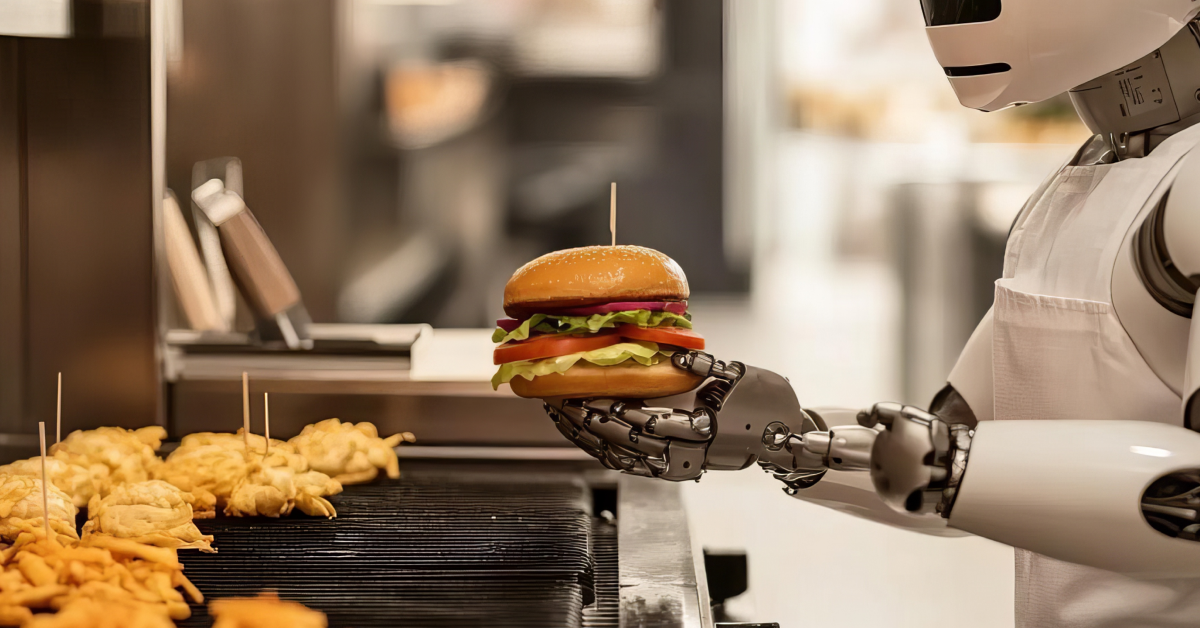
Restaurant operations are becoming more complex. A single restaurant may now manage dine-in orders, pickup, delivery, QR ordering, third-party platforms, direct online ordering, phone orders, loyalty offers, customer reviews, kitchen timing, and staff scheduling at the same time. That is why ai restaurant ordering is becoming important for restaurants that want to improve accuracy, reduce pressure during peak hours, and make ordering more efficient.
iOrders describes its AI food ordering system as a platform that uses machine learning to adapt to a restaurant’s menu, predict customer preferences, and optimize the ordering process. It also positions the system around data-driven analytics and smarter restaurant management.
For Canadian restaurants, AI ordering is not only about new technology. It is about solving daily operational problems: missed orders, manual errors, slow service, inconsistent upselling, limited customer insight, and staff overload.
What Is an AI Ordering System?
An AI ordering system uses artificial intelligence to support or automate parts of the restaurant ordering process. It can help customers place orders, recommend menu items, manage order flow, identify preferences, support upselling, and provide data insights to restaurant operators.
Depending on the system, AI ordering may support:
- Online ordering
- Voice ordering
- Menu recommendations
- Smart upselling
- Order accuracy checks
- Customer preference tracking
- Predictive menu suggestions
- Automated responses
- Kitchen order routing
- Review and feedback analysis
The goal is to reduce manual friction and make the ordering process smarter for both customers and staff.
Why Restaurants Need Smarter Ordering Systems
Restaurants are under pressure to serve faster while maintaining accuracy and quality. During busy periods, staff may handle calls, dine-in guests, delivery orders, pickup requests, and app notifications all at once.
This creates several problems:
- Missed phone calls
- Incorrect orders
- Slow response times
- Kitchen confusion
- Poor customer communication
- Limited upselling
- Staff stress
- Unclear order data
- Inconsistent service
AI ordering systems help by organizing order flow and supporting decision-making. They do not replace the restaurant’s hospitality. They reduce repetitive operational pressure so staff can focus on service quality.
AI Can Reduce Order Errors
Order errors are costly. A wrong item, missing modifier, incorrect address, or misunderstood special request can lead to refunds, remakes, bad reviews, and customer frustration.
AI ordering systems can reduce errors by guiding customers through clearer ordering steps, confirming details, capturing modifiers, and standardizing how orders enter the system.
For example, if a customer orders a burger, the system may prompt for:
- Size
- Add-ons
- Side choice
- Sauce preference
- Spice level
- Allergies or notes
- Pickup or delivery time
- Payment confirmation
This creates a more complete order before it reaches the kitchen.
AI Helps Restaurants Personalize the Ordering Experience
Personalization is one of the biggest advantages of AI ordering. Instead of showing every customer the same menu in the same way, AI can use behavior and preferences to recommend relevant items.
A returning customer may see favorite dishes first. Someone who often orders vegetarian meals may receive vegetarian recommendations. A customer who orders family combos may see larger meal bundles.
iOrders’ AI ordering page states that the system adapts to a restaurant’s menu and predicts customer preferences.
This can improve the customer experience because ordering feels faster and more relevant. It can also help restaurants promote add-ons, combos, and high-margin items more intelligently.
AI Ordering Supports Better Upselling
Upselling is common in restaurants, but it can be inconsistent when staff are busy. A team member may forget to suggest drinks, sides, desserts, or add-ons during peak hours.
AI ordering systems can make upselling more systematic. They can recommend items based on the order, customer profile, time of day, or popular combinations.
Examples include:
- Suggesting fries and a drink with a burger
- Recommending dessert after a dinner order
- Offering extra toppings for pizza
- Promoting family-size sides
- Suggesting a combo instead of individual items
- Recommending a popular add-on based on customer history
The value is not aggressive selling. It is relevant suggestion. Customers are more likely to accept add-ons when they make sense with the meal.
AI Can Improve Peak-Hour Order Flow
Peak hours are where restaurant operations are tested. Lunch rush, dinner service, weekends, and special events can overwhelm staff if order channels are not organized.
AI ordering systems can help by:
- Capturing orders automatically
- Reducing phone pressure
- Routing orders clearly
- Organizing pickup and delivery times
- Highlighting order patterns
- Supporting kitchen pacing
- Reducing repetitive questions
- Helping customers place complete orders
This helps the restaurant handle more demand without letting service quality collapse.
Large restaurant brands are already investing in AI ordering. The Wall Street Journal reported that Yum Brands, owner of Taco Bell, KFC, Pizza Hut, and Habit Burger, partnered with Nvidia to implement AI-driven services including voice ordering across hundreds of locations. While independent restaurants may not need enterprise-scale systems, the trend shows that AI ordering is becoming a serious operational tool.
AI Ordering Creates Better Data for Operators
Many restaurant decisions are still made based on instinct. Experienced operators know their business well, but AI ordering systems can add useful data.
Restaurants can learn:
- Which items are ordered most often
- Which add-ons increase basket size
- Which times have the most demand
- Which customers return frequently
- Which offers perform best
- Which menu items are commonly paired
- Which locations or zones order most
- Which customer segments prefer delivery or pickup
This helps owners make better decisions about menu design, promotions, staffing, inventory, and customer engagement.
iOrders positions its AI ordering system around data-driven analytics that help restaurants manage operations more intelligently.
AI Can Support Menu Optimization
Menus are not static. Restaurants need to know which items perform well, which items slow down the kitchen, which items customers ignore, and which combinations produce stronger order value.
AI ordering systems can help identify patterns over time. If certain items sell better during lunch, they can be promoted more heavily during that window. If certain modifiers are commonly selected, the restaurant may adjust menu structure. If an item has high views but low orders, pricing or description may need adjustment.
Menu optimization becomes easier when restaurants are not relying only on gut feeling.
AI Ordering Helps With Direct Digital Channels
AI ordering becomes more powerful when connected with direct ordering systems, loyalty, branded apps, and customer data.
A restaurant that owns its ordering channel can use AI insights more effectively because the customer relationship is direct. The system can personalize recommendations, support loyalty campaigns, and help operators understand repeat behavior.
This connects closely with iOrders’ broader platform, which includes commission-free online ordering, white-label mobile apps, loyalty and rewards, smart campaigns, delivery support, and review tools.
For restaurants, the combination matters. AI ordering is most useful when it is part of a connected digital restaurant system rather than a separate tool.
Staff Can Focus More on Hospitality
AI ordering should not make restaurants feel less human. When used well, it can free staff from repetitive work so they can focus on guest experience.
Instead of answering the same menu questions repeatedly, staff can handle hospitality, problem-solving, quality checks, packaging, dine-in service, and customer recovery.
This is especially helpful during labor shortages or busy shifts. AI can support the order process while employees focus on the parts of restaurant service that require human attention.
What Restaurants Should Consider Before Adopting AI Ordering
Before adopting an AI ordering system, restaurants should evaluate whether it fits their operations.
Important questions include:
- Does it work with the existing menu?
- Can it support modifiers and special requests?
- Does it integrate with current ordering systems?
- Can it support pickup and delivery?
- Does it provide useful customer data?
- Can staff manage it easily?
- Does it improve order accuracy?
- Does it support direct customer relationships?
- Can it scale as order volume grows?
The right system should make operations easier, not more complicated.
Conclusion
AI ordering systems are transforming restaurant operations by making ordering faster, smarter, more accurate, and more data-driven. For restaurants managing dine-in, pickup, delivery, online ordering, and customer engagement at the same time, AI can reduce pressure and improve consistency.
For Canadian restaurants, this shift is especially relevant as customers continue to expect digital convenience and personalized experiences. AI ordering can help restaurants manage peak hours, reduce errors, recommend items, understand customer behavior, and improve direct digital ordering.
iOrders supports this transformation with an AI-powered ordering system designed to adapt to menus, predict preferences, optimize ordering, and provide data-driven insights. For restaurants that want to modernize operations without losing control of the customer experience, AI ordering is becoming an important part of the next stage of restaurant technology.