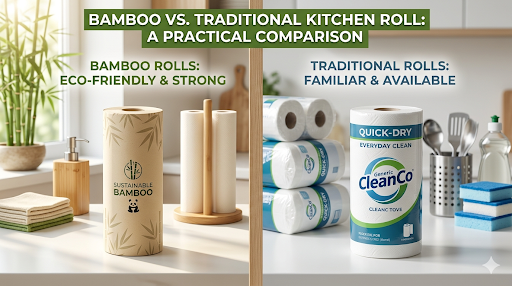
Kitchen roll is one of those household essentials that most of us use every day without giving it much thought. Whether it is wiping down worktops, cleaning up spills, drying hands, or tackling unexpected messes, a reliable kitchen roll can make everyday tasks much easier.
However, as sustainability becomes a growing priority for UK households, many consumers are starting to question the environmental impact of the products they use. This has led to increased interest in bamboo based alternatives that promise to offer the same convenience while being kinder to the planet.
In this guide, we take a closer look at Bamboo Kitchen Roll vs Traditional Kitchen Roll to help you understand the differences between the two options. From sustainability and performance to cost and practicality, we will explore what sets them apart and which may be the better choice for your home.
Understanding Traditional Kitchen Roll
Traditional kitchen roll is typically made from virgin wood pulp or recycled paper fibres. For decades, it has been the standard choice found in homes across the UK.
Manufacturers process wood fibres into absorbent sheets that are perforated into convenient rolls. These products are designed to be disposable, making them ideal for quick clean ups and everyday household use.
Many consumers appreciate traditional kitchen roll because it is widely available, familiar, and often offered at a range of price points. However, concerns have grown regarding the environmental impact associated with the production of paper products derived from trees.
The harvesting of trees, transportation of raw materials, manufacturing processes, and packaging can all contribute to a product’s environmental footprint.
What Is a Bamboo Kitchen Roll?
Bamboo kitchen roll is made from bamboo fibres rather than wood pulp. Bamboo is a fast growing plant that can reach maturity in just a few years, making it one of the most renewable natural resources available.
Unlike many tree species that can take decades to mature, bamboo regenerates quickly after harvesting without requiring replanting. This makes it an attractive material for manufacturers seeking more sustainable alternatives to traditional paper products.
Modern bamboo kitchen rolls are designed to offer the same convenience and performance as conventional options while reducing reliance on forest resources.
As demand for eco-friendly household products continues to rise, bamboo kitchen roll has become increasingly common in supermarkets and online stores throughout the UK.
Sustainability Comparison
One of the biggest reasons consumers compare Bamboo Kitchen Roll vs Traditional Kitchen Roll is sustainability.
Resource Growth
Trees used in paper production often require many years to reach harvestable maturity. Depending on the species, this process can take several decades.
Bamboo grows at a much faster rate. Some varieties can grow several feet in a single day under ideal conditions. This rapid growth cycle allows bamboo to be harvested more frequently while maintaining a continuous supply.
Land Efficiency
Bamboo can produce a significant amount of usable fibre from a relatively small area of land. Because it regenerates naturally from its root system, less intervention is required after harvesting.
Traditional forestry operations often involve longer regeneration periods and larger land requirements.
Environmental Impact
Many bamboo product manufacturers focus on reducing plastic packaging and improving sustainability throughout their supply chains.
While no paper product is entirely impact free, bamboo is generally considered a more renewable raw material than virgin wood pulp due to its rapid growth and regenerative properties.
For environmentally conscious households, this factor alone can make bamboo an appealing alternative.
Performance and Absorbency
Environmental benefits are important, but consumers also want products that perform well in everyday situations.
Kitchen rolls must be able to absorb liquids effectively and withstand common cleaning tasks without falling apart.
Traditional Kitchen Roll Performance
Many traditional kitchen rolls have been refined over decades to maximise absorbency. Premium brands often provide excellent liquid retention and durability.
Depending on the product, users may find that fewer sheets are needed for larger spills.
Bamboo Kitchen Roll Performance
Modern bamboo kitchen roll has improved significantly in recent years. High quality products can deliver impressive absorbency while maintaining strength during use.
Some consumers even report that bamboo based products remain stronger when wet compared with certain conventional alternatives.
The performance gap between the two options has narrowed considerably, making bamboo a practical choice for everyday household cleaning.
Softness and User Experience
Comfort may not be the first thing people think about when buying kitchen roll, but softness can still influence user satisfaction.
Traditional paper products have long been associated with a familiar texture that many consumers know and trust.
Bamboo products may feel slightly different depending on the manufacturing process and fibre composition. However, advances in production techniques have enabled many brands to create soft and pleasant products that perform well across a variety of tasks.
For most households, the difference in feel is unlikely to be a deciding factor after a short adjustment period.
Durability and Strength
Durability is another important consideration when comparing Bamboo Kitchen Roll vs Traditional Kitchen Roll.
A kitchen roll that tears easily can increase waste and reduce overall value.
Traditional kitchen roll products vary significantly depending on quality and construction. Some premium products offer excellent tear resistance, while lower cost alternatives may be less durable.
Bamboo kitchen roll often benefits from the natural strength of bamboo fibres. Many users find that it performs particularly well when wet, making it suitable for cleaning tasks that involve moisture.
Strong sheets can also reduce the number required for certain jobs, helping to improve efficiency.
Cost Considerations
Price remains a key factor for many households.
Traditional kitchen roll is available in a wide range of prices, from budget options to premium products. Because it has been established for many years, competition among manufacturers is strong.
Bamboo alternatives may sometimes carry a slightly higher upfront cost. This is often due to smaller production volumes and the specialised nature of sustainable product manufacturing.
However, value should not be measured solely by the purchase price. Factors such as durability, absorbency, and sheet usage can influence the overall cost effectiveness of a product.
As demand continues to grow, bamboo products are becoming increasingly competitive in terms of pricing.
Packaging and Waste
Packaging plays an important role in the environmental impact of household products.
Many traditional kitchen roll brands still rely on plastic wrapping, although some manufacturers have introduced recyclable alternatives.
Numerous bamboo brands place a strong emphasis on reducing packaging waste. Recyclable materials and plastic free packaging have become common features among environmentally focused companies.
Consumers seeking to reduce household waste often view this as an additional advantage of bamboo based products.
Availability Across the UK
Traditional kitchen roll remains widely available in supermarkets, convenience stores, discount retailers, and online marketplaces.
Bamboo alternatives were once considered niche products, but that is changing rapidly. Today, consumers can find bamboo options through major retailers as well as specialist eco friendly brands.
The increasing availability of bamboo products reflects growing consumer interest in sustainable household essentials.
This wider access makes it easier than ever for households to try bamboo alternatives without significant inconvenience.
Long Term Environmental Considerations
Many people choosing sustainable products are thinking beyond immediate convenience. They want to understand how everyday purchases contribute to broader environmental goals.
Products made from rapidly renewable resources can help reduce pressure on slower growing forestry systems. While responsible forest management remains important, diversification of raw materials can support more sustainable production models.
This is one reason why bamboo has become increasingly popular across various household categories, including paper products, home goods, and personal care items.
Some households that begin with kitchen rolls eventually explore other sustainable alternatives, including bamboo toilet rolls and additional eco-friendly products for the home.
Similarly, consumers often discover related products such as bamboo tissue options that align with their sustainability objectives.
Which Option Is Right for Your Household?
Choosing between traditional kitchen roll and bamboo kitchen roll ultimately depends on your priorities.
If familiarity and widespread availability are your primary concerns, traditional kitchen roll remains a practical option.
However, if sustainability is an important factor in your purchasing decisions, bamboo kitchen roll offers several compelling advantages. Its renewable nature, growing availability, strong performance, and potential environmental benefits make it an attractive alternative for modern households.
Many consumers find that once they try bamboo kitchen roll, the transition is surprisingly straightforward. Performance levels are often comparable, while the sustainability credentials provide added peace of mind.
Final Thoughts
When comparing Bamboo Kitchen Roll vs Traditional Kitchen Roll, it becomes clear that both options can effectively handle everyday household tasks. Traditional kitchen roll remains a familiar and convenient choice, while bamboo alternatives provide an opportunity to reduce reliance on slower growing natural resources.
As awareness of environmental issues continues to grow across the UK, more consumers are exploring sustainable products that fit seamlessly into daily life. Bamboo kitchen roll has emerged as one of the most accessible and practical alternatives available today.
The best choice will depend on your household needs, budget, and environmental priorities. For many families, bamboo kitchen roll offers a balanced combination of performance, convenience, and sustainability that makes it well worth considering.