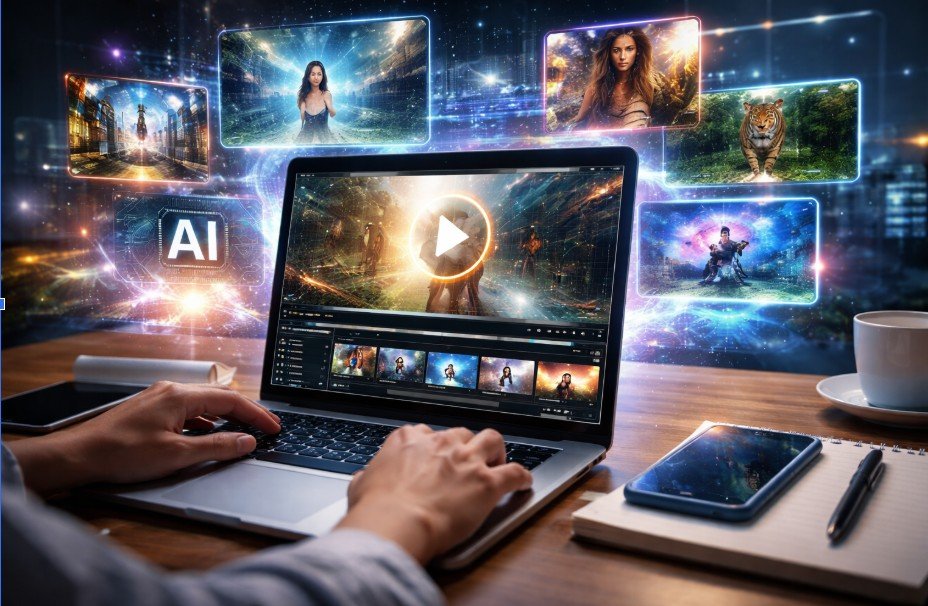
Digital content is evolving at a remarkable pace. Audiences today no longer engage with static visuals the same way they once did. Instead, dynamic visuals, motion-based storytelling, and immersive media formats are becoming the standard. This shift is one of the biggest reasons image-to-video technology is gaining momentum across industries.
AI-powered image-to-video tools allow creators, marketers, educators, and businesses to transform static visuals into compelling video narratives within minutes. Instead of spending hours editing timelines, animating frames, and stitching media together, modern AI systems can automatically add motion, transitions, voiceovers, and music to images.
The result is a faster, smarter, and more scalable way to create professional content. From social media marketing and product showcases to storytelling and educational explainers, image-to-video tools are redefining how digital media is produced.
In this article, we’ll explore six powerful AI image-to-video tools that are shaping the future of digital content creation.
1. Invideo
Invideo stands out as one of the most comprehensive platforms in the world of video creation. As an AI-powered creative suite, invideo allows users to seamlessly transform ideas into polished videos in minutes, without needing any prior video production expertise.
With invideo, you can take static images and bring them to life using its advanced ai image to video features. Whether you’re creating promotional content, tutorials, or social media videos, invideo makes it easy to generate professional-quality videos from images with just a few clicks. The AI takes care of the heavy lifting, handling everything from video composition to voiceovers, background music, and visual effects. As a user-friendly platform, invideo ensures that creators of all skill levels can make high-quality videos that stand out.
Beyond image-to-video functionality, invideo works as a complete AI-driven creative suite that allows users to handle video, images, audio, and music within a single environment. This integrated approach eliminates the need to jump between multiple platforms during the creative process. For creators who prefer working on mobile devices, the platform also offers an ai video generator app that enables users to generate, edit, and publish videos directly from their phones while maintaining the same AI-powered workflow and features available on desktop.
2. Runway
Runway has gained significant recognition in the AI creative space for its cutting-edge generative video capabilities. The platform focuses heavily on combining artificial intelligence with advanced visual editing tools, allowing creators to transform images into cinematic video sequences.
One of the most interesting aspects of Runway is its ability to generate realistic motion from still images using generative AI models. Instead of simply applying pre-designed animations, the system analyzes the structure of the image and predicts how motion should occur. This creates more organic and visually impressive results.
Runway also offers tools that support video editing, visual effects generation, background removal, and style transformations. This combination of capabilities makes it particularly useful for filmmakers, designers, and content creators who want to experiment with AI-driven storytelling.
For creators looking to push creative boundaries, Runway offers a powerful environment where images can evolve into complex visual narratives without traditional animation workflows.
3. Pika
Pika has rapidly emerged as a creative AI tool designed specifically for generating animated content from simple inputs. Its image-to-video capability focuses on transforming still visuals into short animated clips that feel lively and engaging.
The platform is designed to be beginner-friendly while still offering impressive creative flexibility. Users can upload an image and guide the AI with prompts that describe how the scene should move. The system then generates motion, camera movements, and visual effects that align with the instructions.
What makes Pika stand out is its ability to create imaginative transformations. Images can evolve into stylized animations, cinematic shots, or artistic sequences depending on the prompt used.
Because of its simplicity and fast generation speed, Pika is especially appealing to creators producing short-form content, social media visuals, and experimental storytelling pieces.
4. Kaiber
Kaiber is another powerful AI tool designed for creators who want to convert images into visually rich videos. The platform focuses heavily on artistic transformation, allowing users to generate animated visuals that feel expressive and stylized.
One of Kaiber’s key strengths is its ability to turn static artwork into flowing video sequences. Artists, musicians, and designers often use the platform to animate illustrations, album covers, and conceptual visuals. The AI interprets visual elements within the image and introduces movement that enhances the storytelling aspect of the artwork.
Kaiber also allows creators to guide motion using prompts and reference styles. This enables users to maintain creative control while still benefiting from AI automation.
For creators exploring music videos, digital art animations, or visually driven storytelling, Kaiber offers an exciting combination of creativity and automation.
5. Luma AI
Luma AI approaches image-to-video creation from a slightly different perspective by emphasizing realism and spatial depth. Its technology focuses on understanding the structure of objects and environments within an image to produce more lifelike motion.
Using advanced AI modeling, Luma AI can generate movement that simulates real-world camera motion such as pans, zooms, and perspective shifts. This capability gives videos a cinematic feel even when they originate from a single still image.
The platform is particularly useful for creators working with architectural visuals, product photography, and environmental scenes. By adding realistic camera movement and depth effects, static images can quickly transform into immersive visual experiences.
Luma AI demonstrates how image-to-video technology can extend beyond simple animation and move toward photorealistic video generation.
6. LeiaPix
LeiaPix specializes in creating depth-based animations from images. Rather than simply applying motion overlays, the platform analyzes different layers within an image to generate a three-dimensional effect.
This approach creates subtle yet highly engaging motion. Objects appear to move relative to each other as if the camera is shifting perspective within a 3D scene. The result feels more immersive than standard slideshow-style animations.
LeiaPix is widely used for transforming photographs, artwork, and product images into visually dynamic content. The platform works particularly well for marketing visuals, digital storytelling, and social media content where eye-catching movement can significantly increase engagement.
Because of its focus on depth animation, LeiaPix offers a unique alternative to traditional image-to-video generation tools.
How AI Image-to-Video Tools Are Changing Digital Marketing
The rise of AI-generated video has major implications for businesses and marketers.
Video consistently outperforms static visuals when it comes to engagement, retention, and conversion rates. However, producing video content at scale has traditionally been expensive and time-consuming.
Image-to-video AI tools eliminate many of these barriers.
Marketers can now transform product images into promotional videos, create animated storytelling sequences for social media, or build engaging educational visuals without extensive production resources. Campaigns that once required dedicated video teams can now be produced in a fraction of the time.
This shift enables businesses to experiment with more content formats, personalize messaging, and maintain a stronger presence across multiple platforms.
What to Look for in an AI Image-to-Video Tool
As AI video technology continues to evolve, choosing the right tool depends on several factors.
Ease of Use: Some platforms prioritize simplicity, allowing beginners to generate videos quickly with minimal learning curve.
Creative Control: Advanced tools offer prompt-based customization and editing options for creators who want more control over motion and storytelling.
Media Integration: Platforms that allow users to work with images, video clips, audio, and music within the same workspace can significantly streamline the creative process.
Output Quality: The best AI tools produce motion that feels natural, cinematic, and visually engaging rather than repetitive or mechanical.
By evaluating these aspects, creators can find the solution that best fits their workflow and content goals.
Conclusion
The future of digital content is increasingly visual, dynamic, and AI-driven. Image-to-video tools are playing a central role in this transformation by enabling creators to turn simple visuals into compelling video stories with minimal effort.
From versatile platforms like invideo to experimental creative tools such as Runway, Pika, Kaiber, Luma AI, and LeiaPix, the possibilities for AI-generated video continue to expand. Each platform offers unique strengths, whether it’s cinematic motion, artistic animation, depth-based visuals, or generative storytelling.
As AI technology continues to improve, the gap between professional video production and everyday content creation will continue to shrink. Creators who embrace these tools early will be better positioned to produce engaging media, adapt to new content trends, and keep up with the ever-evolving digital landscape.
The future of content creation is not just about producing more media—it’s about creating smarter, faster, and more engaging visual experiences powered by artificial intelligence.